February 5, 2024

Unlock mRNA patent trends and IP insights

Discover the intricacies of mRNA and its rapidly advancing technologies with the assistance of KnowMade’s patent expertise.

  • Gain access to valuable insights on the latest mRNA patent news at no cost.
  • Delve deeper into the field with our comprehensive reports.
  • Stay at the forefront of research and development and intellectual property advancements through our monitoring services.

Insights
Featured image of the article Next-Generation mRNA Innovators: Pioneering RNA Delivery and Methane-Targeting Vaccines
SOPHIA ANTIPOLIS, France – October 17, 2025 │ This quarter, KnowMade’s Therapeutic mRNA patent monitoring service reveals two emerging players shaping the next wave of [...]
Featured image of the article CILA Therapeutics: A Newcomer Shaping Pulmonary Drug and mRNA Delivery.
SOPHIA ANTIPOLIS, France – July 16, 2025 │ KnowMade actively tracks therapeutic mRNA innovations as part of its Therapeutic mRNA patent monitoring service. What’s new [...]
Featured image of the article Amplitude Therapeutics a promising newcomer in therapeutic mRNA field.
SOPHIA ANTIPOLIS, France – July 11, 2025 │ KnowMade actively tracks therapeutic mRNA innovations as part of its Therapeutic mRNA patent monitoring service. What’s new [...]
Featured image of the article
SOPHIA ANTIPOLIS, France – April 28, 2025 │ The therapeutic RNA landscape continues to evolve with a robust pace of innovation. The latest Q1 2025 [...]
Featured image of the article Arcturus Therapeutics Achieve EMA Approval Recommendation for KOSTAIVE®, a Breakthrough Self-Amplifying RNA Vaccine.
SOPHIA ANTIPOLIS, France – February 04, 2025 │ KnowMade actively tracks therapeutic mRNA innovations as part of its Therapeutic mRNA patent monitoring services. What’s new [...]
Featured image of the article Patenting Activity in 2024: An Insightful Analysis.
SOPHIA ANTIPOLIS, France – January 30, 2025 │ The last quarterly report for the 2024 Therapeutic mRNA patent monitor is now available! As we leave [...]

Reports

Featured image of saRNA patent landscape report. mRNA cancer therapeutics patent landscape featured image. Featured image of RNA vaccine patent landscape.
Self-amplifying RNA vaccines Patent Landscape Analysis 2023 mRNA Cancer Therapies Patent Landscape Analysis 2022 RNA vaccine Patent Landscape 2021

Monitor

mRNA patent monitor featured image.
Therapeutic mRNA Patent Monitor


October 17, 2025

Next-Generation mRNA Innovators: Pioneering RNA Delivery and Methane-Targeting Vaccines

SOPHIA ANTIPOLIS, France – October 17, 2025 │ This quarter, KnowMade’s Therapeutic mRNA patent monitoring service reveals two emerging players shaping the next wave of RNA innovation: Parcel Bio, pioneering nanoparticle-free delivery, and ArkeaBio, developing mRNA vaccines for methane mitigation.

Two Emerging Players Expand the Frontiers of Therapeutic mRNA Innovation

Two new entrants have emerged in the therapeutic mRNA patent landscape this quarter, each showcasing the diversity and dynamism of innovation within the field. Parcel Bio is pioneering a novel nanoparticle-free RNA delivery system designed to overcome the limitations of lipid nanoparticles (LNPs), while ArkeaBio applies mRNA technology in an entirely different arena, aiming to reduce agricultural methane emissions through microbial immunization. Their distinct approaches illustrate how the mRNA field continues to evolve beyond traditional human therapeutics, expanding into both technological and environmental applications that push the boundaries of RNA medicine.

Parcel Bio: Reinventing RNA Delivery Beyond Nanoparticles

A Newcomer Redefining the Rules of RNA Delivery

Parcel Bio, a San Francisco biotechnology startup founded in 2023, has entered the KnowMade’s Therapeutic mRNA patent monitoring service with its first patent application published on August 7, 2025. Parcel Bio is a seed-stage, venture-backed company, with David Weinberg, PhD (CEO) and Chris Carlson, PhD (CSO) as co-founders. Parcel Bio aims to disrupt the RNA delivery space by addressing a long-standing limitation: the reliance on lipid nanoparticles (LNPs) for systemic mRNA delivery.

Despite major breakthroughs in mRNA design and manufacturing, efficient, safe, and targeted delivery remains the key technological challenge. LNPs, the current gold standard, are associated with immunogenicity, limited tissue targeting, rapid hepatic clearance, and dose-limiting toxicity, particularly in repeated dosing scenarios.

STAmP™: A Nanoparticle-Free Path to Safe and Targeted mRNA Delivery

Parcel Bio’s proprietary STAmP™ platform, short for Stabilization and Targeting by Annealing mRNA to ParcelOligos, is a non-viral, nanoparticle-free delivery system for mRNA medicines. Instead of encapsulating mRNA in lipid nanoparticles, the STAmP approach uses short, chemically modified synthetic oligonucleotides, known as ParcelOligos, to tile the length of the mRNA molecule. These oligos not only protect the transcript from enzymatic degradation but also allow targeted delivery to specific cell types through conjugation with ligands such as GalNAc or C16.

Based on the patent application WO2025/166052, the claimed advantages of this technology comprise enhanced stability and reduced immunogenicity as illustrated in figure 1. Indeed, ParcelOligo-complexed mRNA resists degradation in serum (Example 1) and withstands RNase digestion (supported by examples 4, 7) and chemically modified oligos (e.g., 2′-OMe, 2′-MOE, C16) do not trigger innate immune responses, enabling repeated dosing (Supported by examples 2, 5, 8). Other advantages claimed are:

  • Efficient translation: Complexed mRNA remains functional and translates efficiently into protein both in vitro and in vivo (Supported by examples 6, 9–12).
  • Targeted delivery: In vivo experiments show that STAmP complexes can direct expression to the spinal cord (example 11) or liver (example 13), depending on the targeting ligand used.
  • Carrier-free uptake: C16- or GalNAc-conjugated oligos facilitate transfection without lipid nanoparticles or transfection reagents, even in primary cells (Example 13).
Experimental data from WO2025/166052 showing how Parcel Bio’s STAmP™ oligo complexes enhance mRNA stability and reduce innate immune response.

Figure 1: Enhanced stability and reduced immunogenicity.
A. Complexing Fluc[opt2] mRNA with 9 ParcelOligos spanning the CDS and 3’ UTR (in green) protects the mRNA from enzymatic degradation by RNase Tl, as indicated by the presence of the lower bands in the (+) lane. The higher bands present in both the untreated (-) and treated (+) lanes represent the poly(A) tail which is not degraded by RNase Tl, due to the lack of guanosine nucleotides
B. Naked Fluc[opt2] mRNA (red arrow) elicited an IFN response as indicated by the induction of luminescence signal (le7 RLU).
C16 ParcelOligo complexed Fluc[opt2] mRNA (green arrow) demonstrated a level of luminescence equivalent to the negative control.
These data indicate that complexing C16 ParcelOligos to the CDS and 3’ UTR of the mRNA aids in innate immune evasion. Figure adapted from patent publication.

ArkeaBio’s Nucleic Acid Vaccines Target Methanogens to Cut Livestock Emissions

From Lab to Pasture: ArkeaBio’s mRNA Approach to Greener Agriculture

ArkeaBio is a pioneering biotechnology company based in Boston, Massachusetts (USA), dedicated to combating agricultural methane emissions, one of the most potent contributors to climate change. The company develops innovative microbial-based vaccines that target methane-producing microbes in livestock, particularly in ruminants like cows, aiming to dramatically reduce enteric fermentation emissions.

What sets ArkeaBio apart is its strategic application of cutting-edge mRNA technology. By leveraging the principles of mRNA immunization, similar to those employed in human vaccines, the company designs microbial interventions that activate the animal’s immune system against methanogenic archaea in the rumen. This approach offers a scalable, low-carbon, and non-GMO solution to mitigate one of agriculture’s most stubborn environmental challenges.

With a mission aligned with global climate goals, ArkeaBio’s platform stands at the intersection of synthetic biology, microbiome science, and RNA therapeutics. The company represents a new frontier in sustainable agriculture, one where vaccine innovation can transform livestock from a major source of emissions into part of the climate solution.

ArkeaBio’s mRNA Platform: Targeting Methanogens to Cut Emissions at the Source

The general concept of ArkeaBio’s invention is a nucleic acid-based vaccine designed to generate an immune response against methanogenic archaea, microorganisms responsible for methane and hydrogen production in the digestive tract or other environments, as illustrated in the figure 2.

The vaccines encode antigens derived from methanogens, aiming to:

  • reduce methane and/or hydrogen production;
  • modulate the intestinal microbiome;
  • treat or prevent diseases associated with excessive methanogen activity.
Diagram from WO2025/151711 illustrating ArkeaBio’s nucleic-acid vaccine principle targeting methanogenic archaea to cut livestock methane emissions.

Figure 2: General principle of nucleic acid vaccines targeting methanogens
Nucleic acids, e.g., mRNA, (601) are mixed with lipids (602) to form lipid nanoparticles (603). The lipid nanoparticles (603) are formulated into a vaccine (604) and used to vaccinate a ruminant (605), such as a cow. Adapted from patent application WO2025/151711.

The description of WO2025/151711 identifies a broad range of methanogenic archaea as vaccine targets, primarily belonging to the orders Methanobacteriales, Methanomassiliicoccales, Methanosarcinales, and Methanomicrobiales. These taxa represent the major methane-producing archaea found in human and animal digestive ecosystems. Among them, the experimental section specifically evaluates antigens from Methanobrevibacter smithii, Methanobrevibacter ruminantium, Methanosphaera stadtmanae, and Methanomassiliicoccus luminyensis, demonstrating that vaccination with nucleic acid constructs encoding key enzymes (such as McrA and HdrA) elicits immune responses capable of reducing methane production in vitro and in vivo.

To support the concept, in Examples 1 and 2 of WO2025/151711, the inventors demonstrate the construction, expression, and immunogenicity of nucleic acid vaccines targeting Methanobrevibacter smithii. In Example 1, mRNA constructs encoding key methanogen antigens (specifically the methyl-coenzyme M reductase subunit A (McrA), the heterodisulfide reductase subunit A (HdrA), and a predicted surface glycoprotein) were synthesized from codon-optimized DNA templates under a T7 promoter. When transfected into HEK293 cells, these mRNAs yielded strong protein expression verified by Western blot and immunofluorescence, confirming proper translation and localization. Example 2 evaluated the same constructs formulated in LNPs and administered intramuscularly to BALB/c mice in a prime–boost regimen. Vaccinated mice developed robust systemic IgG and mucosal IgA responses against the recombinant methanogen antigens, with sera recognizing native proteins in M. smithii and Methanosphaera stadtmanae lysates. These findings establish both the effective in-cell expression of methanogen antigens and their capacity to elicit specific, cross-reactive immune responses in vivo.

Conclusion

The emergence of Parcel Bio and ArkeaBio in Q2–Q3 2025 underscores the remarkable breadth and momentum of innovation in the mRNA field. From delivery breakthroughs that promise safer, more targeted, and repeatable dosing, to novel applications transforming how we approach global challenges like methane emissions, these newcomers exemplify the sector’s rapid diversification.

KnowMade’s patent monitoring continues to capture these pivotal developments, offering strategic insights into how next-generation RNA technologies are shaping the future of therapeutics, biotechnology, and sustainability. For more detailed insights into these developments and how they may impact your business, please contact us.


Press contact
contact@knowmade.fr
Le Drakkar, 2405 route des Dolines, 06560 Valbonne Sophia Antipolis, France
www.knowmade.com

About the author
Elodie Bovier, PhD., works at KnowMade as a Patent Analyst in the field of Biotechnology and Life Sciences. She holds a PhD in genetic and molecular biology from the Paris Sud University. She also holds the Industrial Property International Studies Diploma (in Patent and Trademark & Design Law) from the CEIPI (Strasbourg, France).

About KnowMade
KnowMade is a technology intelligence and IP strategy consulting company specialized in analyzing patents and scientific publications. The company helps innovative companies, investors, and R&D organizations to understand competitive landscape, follow technological evolutions, reduce uncertainties, and identify opportunities and risks in terms of technology and intellectual property.
KnowMade’s analysts combine their strong technology expertise and in-depth knowledge of patents with powerful analytics tools and methodologies to turn patent information and scientific literature into actionable insights, providing high added value reports for decision makers working in R&D, innovation strategy, intellectual property, and marketing. Our experts provide prior art search, patent landscape analysis, freedom-to-operate analysis, IP due diligence, and monitoring services.
KnowMade has a solid expertise in Compound Semiconductors, Power Electronics, Batteries, RF Technologies & Wireless Communications, Solid-State Lighting & Display, Photonics, Memories, MEMS & Sensors, Semiconductor Packaging, Medical Devices, Medical Imaging, Microfluidics, Biotechnology, Pharmaceutics, and Agri-Food.cahue

July 16, 2025

CILA Therapeutics: A Newcomer Shaping Pulmonary Drug and mRNA Delivery

SOPHIA ANTIPOLIS, France – July 16, 2025 │ KnowMade actively tracks therapeutic mRNA innovations as part of its Therapeutic mRNA patent monitoring service. What’s new today?

Spotlight on Emerging Innovators: The Strategic Value of Patent Monitoring

The first half of 2025 confirms the ongoing momentum in therapeutic mRNA innovation, as highlighted in KnowMade’s press release for Q2 2025. A total of 272 new patent publications were identified in Q2, following the 257 recorded in Q1, demonstrating a consistent upward trend in intellectual property activity across the field.

One of the key strengths of KnowMade’s patent monitoring service lies in its ability to detect emerging players at the forefront of technological innovation. Through systematic tracking of first-time patent filings, the service provides early visibility into startups and academic spin-offs often before they secure major funding or public recognition. Notable examples include the identification of AGS Therapeutics in 2023, a French biotech innovating with microalgae extracellular vesicles (MEVs) for mRNA delivery, see our detailed Insight from November 2024, as well as Pinion Immunotherapeutics, Arcalis, and Amplitude Therapeutics in 2025.

Cila therapeutics, identified this quarter, is a company not focused on mRNA technology, but that develops an interesting delivery system targeting the lung.

More Than RNA: CILA’s Dual Strategy in Respiratory Therapeutics

A Pipeline Built for Pulmonary Precision

Founded in 2018 and headquartered in Boston, Massachusetts, CILA Therapeutics is a privately held biotech company focused on developing inhaled therapies for both common and rare respiratory conditions. Led by Dr. Safia K. Rizvi, a seasoned biopharma executive, the company is advancing treatments for diseases such as Primary Ciliary Dyskinesia (PCD), COPD, severe asthma, bronchiectasis, cystic fibrosis, and viral infections. For treating patients affected by such pathologies, a silent enemy reduces the effectiveness of inhaled therapies: the mucus (see figure 1). Normal mucus protects the respiratory apparatus by trapping undesired elements which is cleared by the mucociliary elevator. However, genetic and environmental factors cause mucus overproduction and/or diminished mucociliary clearance in obstructive airway diseases. This leads to mucus build-up and the formation of “Pathological Mucus Plugs” – a mesh-like network of mucin proteins that form thick tenacious mucus plugs that are difficult to clear.

Comparison of healthy versus obstructed airways, highlighting the mucus challenge in respiratory diseases targeted by CILA Therapeutics.

Figure 1: Illustration of normal and obstructive airways. From CILA website.

The company’s flagship product, CIL-05, is a non-RNA-based therapy designed to reduce mucus viscosity and enhance airway clearance in PCD patients. It uses low-density respirable microspheres encapsulating stabilized mucolytic agents like sodium 2-mercaptoethane sulfonate and DNase, delivered via a dry-powder inhaler (DPI). Currently in preclinical development, CIL-05 is expected to enter clinical trials within the next 12 months following pre-IND meetings with the FDA (see figure 2).

Overview of CILA’s development pipeline, including CIL-05 and RNA co-therapy platforms for treating pulmonary disorders.

Figure 2: Current CILA pipeline. From CILA website.

Beyond CIL-05, CILA is developing a co-therapy platform focused on nucleic acid delivery, particularly RNA and DNA, to lung and airway cells. The company holds an international patent application supporting this work, WO2025101704, filed on 2024-11-26.

A Lipid-Based Delivery System Targeting RNA Therapeutics to the Lungs

CILA’s international patent application WO2025101704 outlines a proprietary lipid-based system optimized for the targeted delivery of RNA molecules to pulmonary tissues. The invention addresses long-standing limitations in lung-directed RNA therapy, such as degradation in the extracellular environment and inefficient uptake by target cells. By encapsulating RNA within lipid vesicles, such as liposomes or lipid nanoparticles, the platform ensures that therapeutic RNAs remain stable, bioavailable, and effectively internalized by lung epithelial cells.

Key innovations lie in the compositional tuning of lipid mixtures, including cationic lipids, phospholipids, and cholesterol derivatives that promote efficient RNA encapsulation and endosomal escape. Indeed, the claimed invention is a composition for enhanced delivery of nucleic acids to lung and airway cells, characterized in that it includes at least a transfection efficiency enhancing agent and a therapeutic nucleic acid with a delivery vehicle. The delivery system is engineered to operate under aerosolized conditions suitable for inhalation therapies, aligning with CILA’s broader inhaled treatment strategy.

According to inventors, the invention offers significant improvements over prior art by enhancing transfection efficiency of nucleic acids, thereby increasing therapeutic efficacy while minimizing systemic exposure and potential side effects. This is supported by preclinical experiments cited in the patent application that demonstrate successful delivery and functional expression of RNA cargos in lung tissues following administration (see figure 3). Nevertheless, it is important to note that these findings are based exclusively on in vitro cellular models. As such, the translational relevance to in vivo contexts remains to be established, and further preclinical studies in animal models are necessary to confirm the efficacy and safety of the approach within the complex environment of a living organism.

Graph illustrating CIL-0X's ability to improve mRNA transfection in bronchial epithelial cells via lipid nanoparticle formulations.

Figure 3: CIL-0X enhancing effect.
The graph illustrates the percentage increase in transfection of nucleic acid in primary human bronchial epithelial cells with and without prior exposure to transfection-enhancing agent CIL-0X. Luciferase mRNA was prepared in 4 different forms, including free mRNA without a delivery vehicle and in three different lipid nanoparticle vehicles, i.e., mRNA-LNP-1, mRNA LNP-2, mRNA-LNP3. The expression of Luciferase was assessed by measuring Luciferase enzyme activity, after 24 hours of nebulized administration of free mRNA and mRNA in LNPs vehicles to the primary human epithelial cells that were pre-treated with either 1.5 mM CIL-OX (transfection enhancing agent/composition) as the TEST arm or 1.5 mM NaCl as the CONTROL arm, 30 minutes before mRNA-LNP administration.
From WO2025101704.

This innovation addresses the challenges of delivering therapeutic nucleic acids effectively to the respiratory system, particularly in patients with conditions like cystic fibrosis and primary ciliary dyskinesia. By utilizing specific agents that enhance transfection efficiency, the invention significantly improves the uptake of therapeutic nucleic acids, thereby increasing their effectiveness. This targeted approach not only enhances the therapeutic potential of nucleic acid-based treatments but also reduces the risk of systemic side effects, making it a promising solution for a wide range of pulmonary diseases.

CILA’s Hybrid Strategy, a plus in a specific landscape

Despite the breakthroughs in systemic mRNA delivery seen during the COVID-19 pandemic, targeted delivery to the lungs remains a major challenge, and opportunity, within RNA therapeutics. The lung’s complex architecture and protective mucosal barriers complicate the effective delivery of nucleic acids, particularly in chronic respiratory conditions. Established players like Translate Bio (acquired by Sanofi) and Arcturus Therapeutics have long explored inhaled mRNA delivery, particularly for cystic fibrosis. More recently, emerging companies such as ReCode Therapeutics have entered the field, each developing proprietary LNPs and delivery vectors optimized for airway administration. Still, most delivery innovations remain systemically focused, leaving a gap for specialized approaches tailored to pulmonary indications.

Among the respiratory diseases that could benefit from localized RNA therapeutics, Primary Ciliary Dyskinesia (PCD) stands out due to its genetic etiology and localized pathology. Characterized by impaired mucociliary clearance and chronic respiratory infections, PCD lacks targeted treatments beyond symptomatic management. CILA Therapeutics is addressing this gap through CIL-05, an inhaled dry-powder mucolytic designed to enhance airway clearance in PCD patients. While CIL-05 is a non-RNA candidate, it reflects CILA’s deep investment in pulmonary medicine. In parallel, the company is exploring delivery enhancements that could benefit broader applications—including cystic fibrosis, pulmonary fibrosis, and rare monogenic lung disorders—where inhaled RNA therapeutics could offer transformative outcomes.

CILA’s approach integrates near-term clinical development with long-term platform innovation. This hybrid model allows the company to de-risk its business by advancing a marketable therapeutic (CIL-05) while concurrently building proprietary delivery technologies that enhance nucleic acid uptake in lung cells. By focusing on disease-relevant delivery, rather than generalized transfection, CILA distinguishes itself from larger players and positions its platform for both in-house programs and future partnering opportunities in respiratory gene therapy.

Conclusion

Innovation in therapeutic mRNA continues to accelerate, and Q2 2025 highlights how impactful contributions increasingly come not only from established leaders, but also from specialized newcomers. CILA Therapeutics exemplifies this trend through its dual focus on mucolytic inhaled treatments and RNA-enhancing delivery systems for respiratory applications. Although its lead asset, CIL-05, is not RNA-based, the company’s patent activity—particularly WO2025101704—demonstrates a clear strategic commitment to overcoming one of mRNA’s greatest challenges: effective pulmonary delivery.

This hybrid model—combining near-term clinical programs with long-term platform innovation—mirrors the adaptability that the RNA therapeutic field demands. Alongside Amplitude Therapeutics, which is advancing trans-amplifying RNA technologies, CILA is reshaping the delivery landscape with application-specific, scalable solutions. These developments underscore a broader shift toward precision delivery technologies tailored to complex indications like cystic fibrosis and PCD.

Crucially, KnowMade’s patent monitoring service enables early identification of such innovators by analyzing first-time patent filings. In a field as dynamic as mRNA therapeutics, timely and focused IP intelligence is key to staying ahead of the curve. KnowMade remains committed to delivering these strategic insights across the global innovation ecosystem. For more detailed insights into these developments and how they may impact your business, please contact us.


Press contact
contact@knowmade.fr
Le Drakkar, 2405 route des Dolines, 06560 Valbonne Sophia Antipolis, France
www.knowmade.com

About the author
Elodie Bovier, PhD., works at KnowMade as a Patent Analyst in the field of Biotechnology and Life Sciences. She holds a PhD in genetic and molecular biology from the Paris Sud University. She also holds the Industrial Property International Studies Diploma (in Patent and Trademark & Design Law) from the CEIPI (Strasbourg, France).

About KnowMade
KnowMade is a technology intelligence and IP strategy consulting company specialized in analyzing patents and scientific publications. The company helps innovative companies, investors, and R&D organizations to understand competitive landscape, follow technological evolutions, reduce uncertainties, and identify opportunities and risks in terms of technology and intellectual property.
KnowMade’s analysts combine their strong technology expertise and in-depth knowledge of patents with powerful analytics tools and methodologies to turn patent information and scientific literature into actionable insights, providing high added value reports for decision makers working in R&D, innovation strategy, intellectual property, and marketing. Our experts provide prior art search, patent landscape analysis, freedom-to-operate analysis, IP due diligence, and monitoring services.
KnowMade has a solid expertise in Compound Semiconductors, Power Electronics, Batteries, RF Technologies & Wireless Communications, Solid-State Lighting & Display, Photonics, Memories, MEMS & Sensors, Semiconductor Packaging, Medical Devices, Medical Imaging, Microfluidics, Biotechnology, Pharmaceutics, and Agri-Food.cahue

July 11, 2025

Amplitude Therapeutics a promising newcomer in therapeutic mRNA field

SOPHIA ANTIPOLIS, France – July 11, 2025 │ KnowMade actively tracks therapeutic mRNA innovations as part of its Therapeutic mRNA patent monitoring service. What’s new today?

Emerging Innovators in a Record-Setting Quarter for Therapeutic mRNA

The continued innovation in therapeutic mRNA is confirmed through the first half of 2025, as reflected by KnowMade’s Therapeutic mRNA patent monitoring service. During Q2 2025 alone, 272 new patent publications were identified—exceeding the 257 recorded in Q1—and underscoring an acceleration in patenting activity within the field. While BioNTech maintained strong patent publication outputs and MIT secures third position with publications covering a broader range of topics, the quarter revealed notable shifts in leadership. Indeed, the University of Texas claimed the top position with 17 new publications exclusively focused on RNA delivery. Strikingly, Sanofi, Moderna, and the University of Pennsylvania, which were dominant names past quarter, did not appear among the top three contributors in Q2 2025.

Q2 2025 also witnessed the granting of 43 new patents across key jurisdictions (US, EP, JP, KR), marking a decrease from the 64 recorded past quarter, but still reflecting high innovation maturity across the sector. As established players solidify their portfolios, new companies are also stepping onto the stage as Pinion Immunotherapeutics and Arcalis identified in Q1 2025. This quarter, a promising newcomer, Amplitude Therapeutics, was identified for the first time in KnowMade monitoring activities. With a focus on trans-amplifying RNA this emerging companies is contributing novel approaches to RNA-based therapies. This insight explores their early IP activity and the implications for the future of mRNA therapeutics.

Amplitude Therapeutics: Accelerating taRNA Innovation for Global Health

Amplitude therapeutics

Founded in 2022 and based in Boston, Amplitude Therapeutics is a seed-stage biotechnology company focused on advancing trans-amplifying RNA (taRNA) technologies. The company is currently in preclinical development phase, led by Dr. Cory Sago, with the aim of redefining RNA-based medicine. The strategy employed is to separate the replicase and antigen-encoding RNAs into two components. Amplitude’s pipeline also includes applications in monoclonal antibody delivery and protein replacement. The company has garnered strong support from leading health and venture stakeholders, securing $1 million from CEPI in March 2024 for pandemic-related taRNA research, and a $2.04 million grant from the Bill & Melinda Gates Foundation to develop low-cost, taRNA-expressed biologics for infectious diseases. Additional backing from Alta Partners, ARCH Venture Partners, and Newpath Partners reinforces Amplitude’s position as a rising innovator in scalable, RNA-based therapeutics for global health.

The taRNA Advantage: Precision, Efficiency, and Scalability

Contrary to the most common platform developed, cis-amplifying RNA, Amplitude Therapeutics’ core platform leverages trans-amplifying RNA (taRNA), see the difference in the figure 1 and a comparison in the table 1. This strategy divides the RNA payload into two molecules: one encoding the replicase, and the other encoding the antigen or therapeutic protein. In contrast, cis-amplifying RNA systems encode both the replicase and the antigen on a single RNA strand, simplifying construct design but increasing RNA size, which might lead to delivery challenges and lower expression control. A detail analysis for the technology developed by a key player in cis-amplifying RNA, Arcturus Therapeutics, can be found in KnowMade insight here.

Comparison of mRNA, cis-amplifying RNA, and trans-amplifying RNA vaccine technologies, showcasing structural and functional distinctions.

Figure 1: A comparison of the three different RNA based vaccines: mRNA, Cis-amplifyingRNA (or selef -amplifying), and Trans-amplifying RNA. Figure from (Bloom et al., 2021).

Cis and Trans amplifying RNA maintains an auto-replicative activity derived from an RNA virus and for that contains a sequence that encodes four non-structural proteins (nsP1–4) responsible of the RNA amplification. In amplifying RNAs, following in situ translation, the nsP1-4 proteins form an RDRP complex which recognizes flanking CSE sequences and amplifies vaccine-encoding transcript to result in the accumulation of the desired protein.  (A) Conventional mRNAs encode the vaccine immunogen (or desired protein). (B) Cis-amplifying RNA encodes the nsP1-4 genes and the vaccine immunogen (or desired protein). (C) Trans-amplifying mRNAs use two different transcripts: a conventional mRNA encoding the nsP1-4 genes and a separate transcript encoding the viral CSE sequences and the vaccine immunogen.

Feature Cis-Amplifying RNA (caRNA) Trans-Amplifying RNA (taRNA)
Number of RNA Molecules 1 2
Replicase and Antigen Encoded on the same RNA Separated across two RNAs
RNA Size Larger Smaller (individually)
Delivery Efficiency Lower (due to size) Higher
Manufacturing Complexity Simpler (single construct) More complex (co-formulation required)
Dose Flexibility Limited High (independent optimization possible)

Table 1: General comparison of Cis-amplifying RNA and Trans-amplifying RNA

By decoupling replicase from the antigenic component, Amplitude’s taRNA technology provides a versatile framework for RNA therapeutics development.

Amplitude Therapeutics’ Proprietary taRNA Platform – Insights from Patent Filings

Amplitude Therapeutics’ trans-amplifying RNA (taRNA) platform is described in two recently filed international patent applications, WO2025096982 and WO2025129137 and, both published in Q2 2025 and filed respectively in November and December 2024.

The international patent application WO2025129137 describes a two-component taRNA vaccine architecture using lipid nanoparticle, as illustrated in the figure 2:

  • R-NP (Replicase Nanoparticle): Encapsulates an RNA molecule encoding the replicase enzyme.
  • Tr-NP (Trans-replicon Nanoparticle): Contains an RNA encoding the antigen or therapeutic payload, appended with a conserved sequence element (CSE) that enables recognition and amplification by the replicase.
Schematic from WO2025129137 patent showing Amplitude Therapeutics’ taRNA two-component vaccine architecture using lipid nanoparticles.

Figure 2: This figure shows an example two-component trans amplifying ribonucleic acid (RNA) (taRNA) vaccine comprising: greater than 99% lipid nanoparticles (LNPs) comprising a replicase construct encoding a replicase (and not comprising a trRNA); and less than 1% LNPs comprising a trans replicating RNA (trRNA) encoding a vaccine antigen (and not comprising a replicase construct). From WO2025129137.

According to the description of the patent application, this invention allows for a significant reduction in the amount of trRNA required for vaccine production, enabling faster and more efficient manufacturing processes. It also facilitates the stockpiling of replicase constructs, reducing the synthesis burden during vaccine development and allowing for rapid responses to emerging pathogens.

On the other hand, the international patent application WO2025096982 focuses on chemical modifications to the taRNA molecules to further enhance their translational efficiency and in vivo stability. These modifications include the use of modified nucleotides, such as pseudouridine and 5-methylcytidine, which help suppress innate immune responses and increase protein expression. In addition, the patent outlines the use of optimized untranslated regions (UTRs) and poly(A) tails to fine-tune mRNA persistence and translational dynamics in host cells.

Conclusion

Q2 2025 highlights how innovation is not limited to established players. New entrants like Amplitude Therapeutics are contributing impactful solutions to therapeutic RNA delivery and expression challenges. Its novel platforms, taRNA, reflect a strategic shift toward modular, scalable, and application-specific RNA technologies. KnowMade’s patent monitoring continues to uncover these key developments, offering critical insights into the next wave of mRNA therapeutics.

As a leader in patent analysis and monitoring, KnowMade closely follows such milestones, providing insights and solutions to support stakeholders in the dynamic mRNA vaccine landscape. For more detailed insights into these developments and how they may impact your business, please contact us.


Press contact
contact@knowmade.fr
Le Drakkar, 2405 route des Dolines, 06560 Valbonne Sophia Antipolis, France
www.knowmade.com

About the author
Elodie Bovier, PhD., works at KnowMade as a Patent Analyst in the field of Biotechnology and Life Sciences. She holds a PhD in genetic and molecular biology from the Paris Sud University. She also holds the Industrial Property International Studies Diploma (in Patent and Trademark & Design Law) from the CEIPI (Strasbourg, France).

About KnowMade
KnowMade is a technology intelligence and IP strategy consulting company specialized in analyzing patents and scientific publications. The company helps innovative companies, investors, and R&D organizations to understand competitive landscape, follow technological evolutions, reduce uncertainties, and identify opportunities and risks in terms of technology and intellectual property.
KnowMade’s analysts combine their strong technology expertise and in-depth knowledge of patents with powerful analytics tools and methodologies to turn patent information and scientific literature into actionable insights, providing high added value reports for decision makers working in R&D, innovation strategy, intellectual property, and marketing. Our experts provide prior art search, patent landscape analysis, freedom-to-operate analysis, IP due diligence, and monitoring services.
KnowMade has a solid expertise in Compound Semiconductors, Power Electronics, Batteries, RF Technologies & Wireless Communications, Solid-State Lighting & Display, Photonics, Memories, MEMS & Sensors, Semiconductor Packaging, Medical Devices, Medical Imaging, Microfluidics, Biotechnology, Pharmaceutics, and Agri-Food.cahue

April 28, 2025

Therapeutic mRNA Innovation Accelerates in Early 2025: New Insights from the Q1 Patent Monitor

SOPHIA ANTIPOLIS, France – April 28, 2025 │ The therapeutic RNA landscape continues to evolve with a robust pace of innovation. The latest Q1 2025 edition of our Therapeutic mRNA patent monitor highlights significant developments in intellectual property activities, shedding light on key contributors and trends in this dynamic field.

BioNTech, Sanofi, Penn, and Moderna Lead mRNA Patent Landscape in Q1 2025

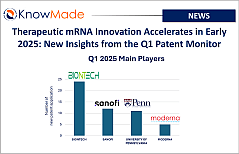
The therapeutic mRNA sector continues to gain momentum, with a strong start to the year reflecting growing global interest and investment in this cutting-edge field. The first quarter of 2025 saw the publication of 257 new patent applications—a substantial increase from the 153 applications recorded in Q1 2024. This surge in activity signals a sustained upward trend in intellectual property developments within the field. BIONTECH led the way with 24 applications, including four co-filed with the UNIVERSITY OF PENNSYLVANIA, reaffirming their strategic academic partnership. Sanofi followed with 12 filings, while the University of Pennsylvania contributed 11 applications in total—including the four co-filed with BIONTECH—and MODERNA added five, see figure 1. All of these organizations remain key players  in the mRNA therapeutics landscape, as identified in our 2023 and 2024 annual summaries.

Bar chart showing the four main innovators during this Q1 2025.

Figure 1: Q1 2025 Patent Filings by Key mRNA Therapeutics Innovators

A significant proportion of these filings—nearly half—focus on innovations in therapeutic mRNA delivery systems, underscoring the industry’s efforts to optimize efficacy and targeting. Vaccination remains the leading therapeutic application area, with BIONTECH’s filings notably addressing vaccine candidates for HIV, herpes, and malaria. These developments highlight both the breadth of ongoing research and the strategic diversification of mRNA-based approaches across major infectious diseases.

Expansion of Enforceable IP Rights Reflects Growing Maturity of mRNA Sector

In addition to the surge in published applications, the first quarter of 2025 also marked a notable increase in the number of newly granted patents in key jurisdictions (US, EP, JP and KR). A total of 64 first-time grants were recorded during the quarter, nearly doubling the 33 new inventions granted in Q1 2024. This significant rise underscores the maturation of R&D efforts in therapeutic mRNA and the progression of early-stage innovations into enforceable rights. The United States accounted for the largest share with 26 new granted patents, followed by Japan with 19, South Korea with 10, and Europe with 9. This geographic distribution reflects the sustained global interest and investment in securing intellectual property around therapeutic mRNA technologies across major innovation hubs.

Emerging Players in mRNA Therapeutics: Early Patent Filings by PINION IMMUNOTHERAPEUTICS and ARCALIS in Q1 2025

The activity of monitoring intellectual property not only enables tracking the evolution of established players but also helps identify the emergence of new entrants in the market through their first patent filings. During the first quarter of 2025 (Q1 2025), several companies making their first patent filings in this field were identified, including PINION IMMUNOTHERAPEUTICS and ARCALIS. Early identification of these new players is essential to anticipate competitive dynamics, detect new technological trends, and potentially uncover opportunities for collaboration or investment.

PINION IMMUNOTHERAPEUTICS

PINION IMMUNOTHERAPEUTICS (formerly ARV TECHNOLOGIES) is a biotechnology company based in Rockville, Maryland, founded in 2024. Specialized in the development of mRNA vaccines, it leverages artificial intelligence and structural biology to design innovative antigens, combined with advanced lipid nanoparticle (LNP) formulations. This approach aims to provide effective treatments against chronic viral infections and certain cancers. The leadership team includes renowned experts such as Dr. Gregory Glenn, CEO, who contributed to the development of the Nuvaxovid vaccine at Novavax, and Dr. Jianzhu Chen, co-founder and Professor of Immunology at MIT. Its patent application US20250092083, co-filed with the Chinese company SUZHOU VENCUBIO, aims to develop a new class of sterol-derived ionizable lipids intended for LNP formulations capable of efficiently delivering therapeutic agents, particularly nucleic acids such as mRNA, siRNA, saRNA, and plasmid DNA.

The lead compound, ARV-T1, was compared to the commercial lipid SM-102 and showed:

  • Efficient mRNA encapsulation,
  • Higher expression of the SARS-CoV-2 Spike protein in 293T cells,
  • Increased transfection of GFP mRNA in BHK cells,
  • More sustained in vivo luciferase expression in mice.

It also induced stronger humoral (total IgG, neutralizing antibodies) and cellular (antigen-specific T cells) immune responses. Moreover, ARV-T1 enabled efficient mRNA delivery in transgenic mice, targeting multiple immune cell types. It also performed well in plasmid DNA transfection, gene silencing by siRNA, and prolonged expression via saRNA. Finally, structural analogs (ARV-T11, T12, T13) were synthesized and characterized (NMR, HPLC, MS) and were found to be as effective or even superior to ARV-T1 and SM-102 in terms of transfection efficiency, encapsulation, and LNP size.

ARCALIS

ARCALIS is a Japanese company founded in 2021, specialized in the development and contract manufacturing (CDMO) of mRNA vaccines and therapies. Resulting from a joint venture between Axcelead, Inc., Japan’s leading drug discovery platform, and Arcturus Therapeutics, a U.S. biotechnology company specializing in mRNA-based medicines, ARCALIS offers integrated services ranging from mRNA design to cGMP-compliant manufacturing, including LNP formulation and analytical testing. In July 2023, the company inaugurated a manufacturing facility in Minamisoma, dedicated to the production of mRNA drug substances, with the ambition to commercialize, starting in 2024, the first approved vaccine using self-amplifying mRNA technology. In November 2024, Meiji Seika Pharma invested in ARCALIS to strengthen domestic mRNA vaccine production in Japan, notably the KOSTAIVE® COVID-19 vaccine. The patent application US20250076306, co-filed with HITACHI, aims to optimize mRNA (or DNA) sequences encoding a target protein by associating each candidate sequence (for example, varying UTRs or codons) with a unique “barcode” peptide, co-expressed with the protein of interest. After expression, the peptides are enzymatically released and analyzed by mass spectrometry, enabling indirect quantification of protein expression based on the mRNA sequence used. This allows multiplexed analysis — many sequence combinations in a single measurement.

  • Example 1 validates this approach using two UTRs for eGFP, showing that peptide intensity reflects expression level.
  • Example 2 demonstrates large-scale application with 9 UTR+ORF combinations and over 2 million possible barcode peptides, randomly combined via DNA Assembly, then analyzed after bacterial amplification, sequencing, and mass spectrometry.

This system thus enables high-throughput screening of optimal sequences with correction of experimental biases, for applications in biotechnology, vaccines, or gene therapy.

Why subscribe to this monitor?

Innovative and dynamic sectors like mRNA therapeutics require clear visibility into the evolving IP landscape. A patent monitoring solution offers companies a strategic advantage, delivering up-to-date and focused intelligence on emerging patents and technological trends. Our tailored services support organizations in identifying new opportunities for collaboration, reinforcing protection of their inventions, and confidently navigating IP complexities. With these insights, businesses are better positioned to shape their innovation strategies and sustain long-term growth in competitive environments. For more detailed insights into these developments and how they may impact your business, please contact us.


Press contact
contact@knowmade.fr
Le Drakkar, 2405 route des Dolines, 06560 Valbonne Sophia Antipolis, France
www.knowmade.com

About KnowMade
KnowMade is a Technology Intelligence and IP Strategy consulting company specialized in analysis of patents and scientific information. The company helps innovative companies and R&D organizations to understand their competitive landscape, follow technology trends, and find out opportunities and threats in terms of technology and patents.
KnowMade’s analysts combine their strong technology expertise and in-depth knowledge of patents with powerful analytics tools and methodologies to turn patents and scientific information into business-oriented report for decision makers working in R&D, Innovation Strategy, Intellectual Property, and Marketing. Our experts provide prior art search, patent landscape analysis, scientific literature analysis, patent valuation, IP due diligence and freedom-to-operate analysis. In parallel the company proposes litigation/licensing support, technology scouting and IP/technology watch service.
KnowMade has a solid expertise in Compound Semiconductors, Power Electronics, Batteries, RF Technologies & Wireless Communications, Solid-State Lighting & Display, Photonics, Memories, MEMS & Solid-State Sensors/Actuators, Semiconductor Manufacturing, Packaging & Assembly, Medical Devices, Medical Imaging, Microfluidics, Biotechnology, Pharmaceutics, and Agri-Food.

February 4, 2025

Arcturus Therapeutics Achieve EMA Approval Recommendation for KOSTAIVE®, a Breakthrough Self-Amplifying RNA Vaccine

SOPHIA ANTIPOLIS, France – February 04, 2025 │ KnowMade actively tracks therapeutic mRNA innovations as part of its Therapeutic mRNA patent monitoring services. What’s new today?

CHMP Recommends Approval of KOSTAIVE® (ARCT-154)

EMA opinion

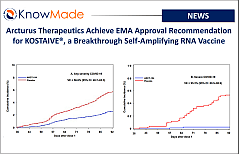
The European Medicines Agency (EMA)’s Committee for Medicinal Products for Human Use (CHMP) has issued a positive opinion recommending the approval of KOSTAIVE®, a self-amplifying mRNA (sa-mRNA) vaccine developed collaboratively by Arcturus Therapeutics, CSL, and Meiji Seika Pharma. Designed for the prevention of COVID-19 in adults aged 18 and older, this vaccine represents a significant advancement in mRNA technology, previously identified in KnowMade’s analyses as a key innovation in vaccines development (see the Self-Amplifying RNA vaccine patent landscape from 2023). KOSTAIVE® utilizes sa-mRNA technology, which enhances immune responses by enabling cells to amplify mRNA and protein production. This advancement offers key benefits, including lower dosage requirements, potentially fewer side effects, and durable immunity. According to CHMP’s evaluation, the vaccine demonstrated significant efficacy and safety in clinical studies. Results showed a reduction in symptomatic COVID-19 cases after two doses compared to placebo, alongside strong neutralizing antibody responses and minimal side effects as illustrated in figure 1​ (EMA evaluation and Nhân Thị Hồ et al., 2024).

Clinical trial data: Cumulative incidence of COVID-19 in KOSTAIVE and placebo groups. Highlights vaccine efficacy from Day 36 post-vaccination.

Figure 1: Cumulative incidence curves of COVID-19 of any severity (A), and severe COVID-19 (B) in vaccine and placebo groups from Day 36. From Nhân Thị Hồ et al., 2024.

The development of KOSTAIVE® is the result of a global collaboration. Arcturus Therapeutics, a leader in mRNA-based medicines for infectious diseases and rare conditions, partnered with CSL and Meiji Seika Pharma to advance this vaccine from clinical trials to commercialization. Arcturus has also been actively involved in advancing mRNA technology through other vaccine candidates and therapeutic pipelines. Notably, Arcturus develops its own mRNA vaccine platform already detailed in KnowMade’s insight here.

Clinical Trials and Safety Validation

The CHMP’s positive opinion follows extensive clinical trials that confirmed the vaccine’s safety, tolerability, and robust immune response. Preclinical research demonstrated that ARCT-154 elicited strong neutralizing antibody responses against multiple COVID-19 variants, including Alpha, Beta, Delta, and Gamma, in non-human primates. Clinical trials were conducted in multiple countries. In Singapore, a Phase I-II clinical trial, partially funded by the Singapore government, was approved in August 2021 to evaluate ARCT-154 and ARCT-165 as both a primary vaccination and a booster following Pfizer-BioNTech vaccination. Meanwhile, in Vietnam, Vinbiocare, a subsidiary of Vingroup, fully sponsored the clinical trials, which involved over 21,000 participants across three phases. Phase I, launched in August 2021 at Hanoi Medical University, assessed safety in 100 volunteers, while Phases II and III were conducted across Bắc Ninh, Hanoi, and Long An, involving over 1,000 volunteers. In Japan, a Phase III non-inferiority trial randomized 828 participants to receive either ARCT-154 or the Pfizer-BioNTech vaccine, with results published in December 2023 (Yoshiaki Oda et al., 2023). Additionally, a Phase III COVID-19 booster trial confirmed that ARCT-154 achieved higher immunogenicity compared to a standard mRNA vaccine, reinforcing its potential as a next-generation COVID-19 vaccine. These comprehensive clinical studies validated the vaccine’s strong safety profile, high immunogenicity, and effectiveness, contributing to its approval in Japan and positioning it as a key player in global COVID-19 vaccination efforts.

Arcturus Technology

Self-Amplifying platform

The IP of Arcturus therapeutic protecting the sa-mRNA platform was describe in KnowMade insight from January 2023 (here), focused on delivery. Briefly, Arcturus’s sa-mRNA vaccine platform allows smaller doses to achieve robust immune responses by using saRNA, which replicates intracellularly to produce antigens over an extended period. Key technical innovations are detailed in Arcturus’ patent families. For example, WO2020191103 describes methods for producing LNPs encapsulating long mRNAs (800–12,000 nucleotides) with high encapsulation efficiency (95–97%) using optimized lipid formulations. Similarly, WO2022056413 improves upon this by addressing the challenges of encapsulating larger mRNAs, employing precise flow rates to reduce shear forces and preserve RNA integrity. Lyophilization methods, outlined in WO2022036170, ensure the stability of LNP formulations during long-term storage, achieving 93% sa-mRNA encapsulation efficiency even after reconstitution. To date, these patent families include granted U.S. patents and pending applications with broad international coverage, as outlined in the following table.

PATENT FAMILY 1ST APPLICATION DATE GRANTED MEMBERS PENDING MEMBERS
WO2020191103 2020-03-18 US11737979 EP, CA, BR, SG, IL, AU, CN, VN, KR, JP, IN
WO2022056413 2021-09-13 US11938227 EP, CA, BR, SG, IL, AU, MX, CN, VN, KR, JP, ID, IN
WO2022036170 2021-08-13 US12178921 EP, AU, BR, CA, CN, ID, IL, IN, JP, KR, MX, SG, VN

In addition to the key patent families protecting its self-amplifying mRNA (sa-mRNA) platform, Arcturus Therapeutics holds patent families covering the sa-mRNA vaccine itself and published since 2021.

The patent family WO2021/183563, titled “Coronavirus Vaccine Compositions and Methods”, published on March 9, 2021 describes nucleic acid molecules encoding both viral replication proteins and antigenic coronavirus proteins or their fragments. The first independent claim as filed is “1. A nucleic acid molecule comprising: (i) a first polynucleotide encoding one or more viral replication proteins, wherein the first polynucleotide is codon-optimized as compared to a wild-type polynucleotide encoding the one or more viral replication proteins; and (ii) a second polynucleotide comprising a first transgene encoding a first antigenic protein or a fragment thereof, wherein the first antigenic protein is a coronavirus protein.”. Currently, this patent family is granted in the U.S. and pending in multiple jurisdictions (AU, CA, EP, HK, JP, and TW).

In addition, the patent family WO2023/010128, titled “RNA Vaccines”, published on July 29, 2022 describes RNA molecules encoding both viral replication proteins and antigenic proteins or fragments thereof. The first independent claim as filed is “An RNA molecule comprising: (a) a first polynucleotide encoding one or more viral replication proteins, wherein one or more miRNA binding sites in the first polynucleotide have been modified as compared to a reference polynucleotide; and (b) a second polynucleotide comprising a first transgene encoding a first antigenic protein or a fragment thereof.”. Unlike the previous patent family, WO2023/010128 remains pending in all jurisdictions with an extensive international coverage (AR, AU, BR, CA, CN, CR, EAPO EA, EP, HK, ID, IL, IN, JP, KR, MX, NZ, PH, SG, TW, and US).

Coronavirus vaccines

The current pipeline of Arcturus comprises three COVID-19 vaccines and two influenza vaccines. Four of them are developed in collaboration with CSL, an Australian multinational specialty biotechnology company (see figure 2). The collaboration and licensing agreement was closed in December 2022 (Press release here). This collaboration firstly results in Japanese approval of ARCT-154, the first Self-Amplifying mRNA vaccine approved for COVID in adults, in November 2023, marking a historic milestone for CSL and Arcturus Therapeutics. Based on robust clinical data demonstrating higher immunogenicity and safety compared to standard mRNA vaccines, this approval is the first major achievement since their 2022 collaboration agreement. Distributed in Japan by Meiji Seika Pharma, ARCT-154 strengthens CSL’s innovative vaccines portfolio and underscores the potential of sa-mRNA technology in combating COVID-19 and other infectious diseases.

Arcturus' partnered mRNA pipeline with CSL. Showcases COVID-19 and influenza vaccine candidates leveraging self-amplifying mRNA technology.

Figure 2: Pipeline of Partnered mRNA Therapeutics and Vaccines
Arcturus has partnered with several industry leaders and has a robust and diverse preclinical drug development pipeline. In collaboration with Arcturus development partners, the company is leveraging the LUNAR® platform to develop RNA medicines for diseases with significant unmet medical needs and accelerated clinical paths. From Arcturus web site.

Why subscribe to this monitor?

A patent monitoring service is an essential asset for businesses striving to stay ahead in innovative fields such as mRNA therapeutics. Our tailored solutions provide timely and curated patent intelligence, equipping organizations with the tools to track technological breakthroughs, identify collaboration opportunities, and protect their innovations from infringement risks. By leveraging our bespoke IP monitoring services, companies gain actionable insights that support informed decision-making, enabling them to navigate the complexities of the intellectual property landscape with confidence. This strategic approach fosters growth and drives innovation across industries.

As a leader in patent analysis and monitoring, KnowMade closely follows such milestones, providing insights and solutions to support stakeholders in the dynamic mRNA vaccine landscape. For more detailed insights into these developments and how they may impact your business, please contact us.


Press contact
contact@knowmade.fr
Le Drakkar, 2405 route des Dolines, 06560 Valbonne Sophia Antipolis, France
www.knowmade.com

About the author
Elodie Bovier, PhD., works at KnowMade as a Patent Analyst in the field of Biotechnology and Life Sciences. She holds a PhD in genetic and molecular biology from the Paris Sud University. She also holds the Industrial Property International Studies Diploma (in Patent and Trademark & Design Law) from the CEIPI (Strasbourg, France).

About KnowMade
KnowMade is a technology intelligence and IP strategy consulting company specialized in analyzing patents and scientific publications. The company helps innovative companies, investors, and R&D organizations to understand competitive landscape, follow technological evolutions, reduce uncertainties, and identify opportunities and risks in terms of technology and intellectual property.
KnowMade’s analysts combine their strong technology expertise and in-depth knowledge of patents with powerful analytics tools and methodologies to turn patent information and scientific literature into actionable insights, providing high added value reports for decision makers working in R&D, innovation strategy, intellectual property, and marketing. Our experts provide prior art search, patent landscape analysis, freedom-to-operate analysis, IP due diligence, and monitoring services.
KnowMade has a solid expertise in Compound Semiconductors, Power Electronics, Batteries, RF Technologies & Wireless Communications, Solid-State Lighting & Display, Photonics, Memories, MEMS & Sensors, Semiconductor Packaging, Medical Devices, Medical Imaging, Microfluidics, Biotechnology, Pharmaceutics, and Agri-Food.

January 30, 2025

Patenting Activity in 2024: An Insightful Analysis

SOPHIA ANTIPOLIS, France – January 30, 2025 │ The last quarterly report for the 2024 Therapeutic mRNA patent monitor is now available! As we leave behind another year, we look back on the mRNA therapeutic patenting activity! The year 2024 marked another dynamic period for technological innovation in mRNA therapeutic area, the race for intellectual property (IP) dominance continued, reflecting the fierce competition.

Global Patent Filing Dynamics: A Slight Increase in 2024

On a global scale, patent filing activity experienced a modest increase in 2024, with 735 new patent families published compared to 639 in 2023, as illustrated in figure 1. This upward trend reflects the growing emphasis on innovation across industries and geographies. The most significant difference was observed in Q3, where 200 patent families were published in 2024, compared to just 120 during the same period in 2023. This surge highlights a particularly productive quarter, for more detail see Q3 2024 Press release.

Comparison of global mRNA patent filings: 2024 vs 2023. Highlights industry growth, key trends, and a surge in Q3 patent activity.

Figure 1: 2024 vs. 2023 new publications activity overview

The geographic distribution of the top 20 entities filing patents in 2024, as shown in Figure 2, reveals notable trends that build on patterns observed in 2023. The United States retains its leading position, with half of the top players originating from the country. This dominance is supported by a robust ecosystem that blends established industrial giants, dynamic startups, and strong academic contributors in this technological field. Europe also demonstrates its commitment to advanced technologies, with four entities among the top 20, reflecting the region’s consistent focus on biotechnology and healthcare. Meanwhile, China continues its rise as a major force in mRNA therapeutic innovation, with three entities included in the top 20. Notably, across the broader patent corpus, Chinese academic institutions are particularly well-represented. These trends underscore the increasingly globalized landscape of technological innovation, where diverse regions contribute to advancements and foster competitive excellence on a global scale.

Geographic distribution of top 20 mRNA patent filers in 2024. Highlights key contributors from the US, Europe, China, and beyond, showcasing global innovation trends.

Figure 2: 2023 Patent filing activity for main industrial players
The 20 first players of the figure represent almost 50% of the whole patent filing activity of 2024. European players are in blue, US in red, Chinese in orange, Japanese in yellow, Australian in purple and Canadian in green. Are also highlighted the following players for 2024: BIONTECH, MODERNA, SANOFI, ABOGEN, PFIZER, and PENN UNIVERSITY.

Top 5 players in 2024

BioNTech and Moderna: Sustaining Leadership in Innovation

BioNTech and Moderna have reaffirmed their positions as leaders in mRNA therapeutic patenting activity in 2024. These industry giants are still dominating the landscape of mRNA therapeutics with 36 and 34 new patent families, respectively. Their ongoing competition is exemplified by the development of mRNA vaccines targeting monkeypox, as detailed in KnowMade’s September 2023 Insight. Both companies’ patent filings for monkeypox vaccines show that they both rely on mRNA platforms with lipid nanoparticles (LNPs) to produce monkeypox vaccines, but they have different approaches. BioNTech and Moderna are in a fierce competition to advance innovation in mRNA therapies, particularly for emerging infectious diseases, as evidenced by the close filing dates of these applications. However, both companies experienced a slight decline in their patenting activity compared to 2023, see figure 3. Despite this, their consistent IP activity underscores their commitment to maintaining a competitive edge in an evolving market. It also highlights their role in addressing global health challenges, where new technologies and treatments are pivotal.

Sanofi, Abogen, and Pfizer: Rising Stars in the Top Five

Sanofi, Abogen, and Pfizer have emerged as key players in 2024, making notable strides within the top five. Sanofi climbed to third place with 13 new patent families published, a significant rise from its fifth position in 2023. This growth aligns with its “challenger position” identified at the end of 2023 (see our Insight), demonstrating the company’s focus on expanding its technological portfolio, bolstered by its acquisition of Translate Bio. Beyond vaccines, Sanofi continues to develop solutions for therapeutic challenges in oncology, immune-related diseases, and rare conditions, solidifying its broader impact on innovation.

Abogen also advanced to fourth position in 2024 with 13 new patent families, highlighting its growing prominence in biotechnology. Known for its expertise in mRNA technology, Abogen has quickly established itself as a significant player since its founding in 2019, particularly in developing cationic lipids for lipid nanoparticle (LNP) systems. Due to its youthful yet extensive portfolio, strong emphasis on lipidic components, and innovation in therapeutic areas, the company is a dynamic force in the evolving field of mRNA delivery.

Pfizer, meanwhile, made a remarkable return to the forefront in 2024, rising from 14th place in 2023 to secure the fifth position. This resurgence is driven by patent families primarily focused on vaccines targeting respiratory diseases such as influenza, RSV, and pneumonia.

Comparison of 2024 vs 2023 patent activity for the top 5 mRNA players. Tracks BioNTech, Moderna, Sanofi, Abogen, and Pfizer’s IP strategies and innovation trends.

Figure 3: 2024 vs 2023 Patent filing activity for the top 5 players

The Critical Role of Delivery Systems in mRNA Therapeutics

Delivery systems remain a cornerstone of mRNA therapeutic development, representing a critical segment of innovation within the MedTech industry. As mRNA technologies evolve, the importance of efficient, targeted, and safe delivery mechanisms becomes increasingly evident, ensuring the stability, cellular uptake, and efficacy of therapeutic payloads.

LNP Systems: Continued Innovation and Strategic Interest

Lipid nanoparticle (LNP) technology continues to dominate as a delivery method for mRNA therapies. Companies like Abogen, a top-five patent filer in 2024, have emphasized innovations in this space, particularly through their development of cationic lipids tailored for LNP systems. Abogen’s rapid rise as a leader in mRNA delivery exemplifies the field’s dynamic progress.

The acquisition of ReNAgade by Orna Therapeutics in 2024 further highlights the strategic importance of LNP systems. Orna’s circular RNA technology, now combined with ReNAgade’s LNP-based RNA delivery systems, detailed in KnowMade insight from November 2023, underscores the industry’s commitment to advancing RNA-centric approaches. Orna’s leadership views this merger as transformative, enabling breakthroughs in RNA-based medicine, including panCAR therapies for oncology, gene editing solutions, and autoimmune treatments. According to Orna’s CEO, see Orna’s Press release, Mr. Munshi, this unification positions the company to “eclipse traditional cell therapy methods and reshape the future of medicine.” This strategic move not only validates the critical role of delivery systems but also underscores their potential to overcome persistent challenges in drug development.

Exploring Novel Delivery Mechanisms: AGS Therapeutics

Beyond LNPs, groundbreaking new delivery technologies are emerging. French biotech company AGS Therapeutics exemplifies this trend with its development of microalgae extracellular vesicles (MEVs) as a delivery platform, see our detailed Insight from November 2024. Founded in 2020, AGS leverages MEVs derived from the freshwater microalga Chlorella vulgaris, a source that offers several distinct advantages. MEVs are inherently non-toxic and non-immunogenic, ensuring their safety for therapeutic applications. Additionally, MEVs demonstrate innovative delivery capabilities, including the ability to cross natural body barriers, enabling oral administration, lymphoid tissue targeting, and nose-to-brain delivery. These features allow MEVs to overcome many of the limitations associated with traditional LNP systems, positioning AGS Therapeutics as a pioneer in the evolving field of mRNA delivery.


Press contact
contact@knowmade.fr
Le Drakkar, 2405 route des Dolines, 06560 Valbonne Sophia Antipolis, France
www.knowmade.com

About the author
Elodie Bovier, PhD., works at KnowMade as a Patent Analyst in the field of Biotechnology and Life Sciences. She holds a PhD in genetic and molecular biology from the Paris Sud University. She also holds the Industrial Property International Studies Diploma (in Patent and Trademark & Design Law) from the CEIPI (Strasbourg, France).

About KnowMade
KnowMade is a technology intelligence and IP strategy consulting company specialized in analyzing patents and scientific publications. The company helps innovative companies, investors, and R&D organizations to understand competitive landscape, follow technological evolutions, reduce uncertainties, and identify opportunities and risks in terms of technology and intellectual property.
KnowMade’s analysts combine their strong technology expertise and in-depth knowledge of patents with powerful analytics tools and methodologies to turn patent information and scientific literature into actionable insights, providing high added value reports for decision makers working in R&D, innovation strategy, intellectual property, and marketing. Our experts provide prior art search, patent landscape analysis, freedom-to-operate analysis, IP due diligence, and monitoring services.
KnowMade has a solid expertise in Compound Semiconductors, Power Electronics, Batteries, RF Technologies & Wireless Communications, Solid-State Lighting & Display, Photonics, Memories, MEMS & Sensors, Semiconductor Packaging, Medical Devices, Medical Imaging, Microfluidics, Biotechnology, Pharmaceutics, and Agri-Food.