
SOPHIA ANTIPOLIS, France – January 20, 2026 │As worldwide R&D efforts in Li-ion batteries continue to intensify, silicon anode technology has become one of the major focuses of innovation. KnowMade’s Patent Monitoring Service for Silicon Anode Li-ion Batteries enables you to stay ahead by closely following the latest technological advances and the key entities shaping the field.
Diverse Innovation Pathways and Growing Strategic Focus on Silicon-Based Anodes
Patent activity in the fourth quarter of 2025 highlights robust and diversified innovation momentum in silicon anode Li-ion battery technology, with approximately 780 new patent families published.
During the fourth quarter of 2025, COSMX, Samsung, ATL, and Panasonic ranked among the most active patent applicants, demonstrating a broad presence across multiple segments of the value chain and underscoring their integrated innovation strategies (Figure 1).
It is also worth noting, during this quarter, Arkema’s presence in the anode segment. The inauguration, in September 2025, of its new laboratory dedicated to solvent-free battery electrode manufacturing fully aligns with this positioning. Arkema’s recent patent filings therefore reflect its intention to protect electrodes incorporating, in particular, silicon-based materials.
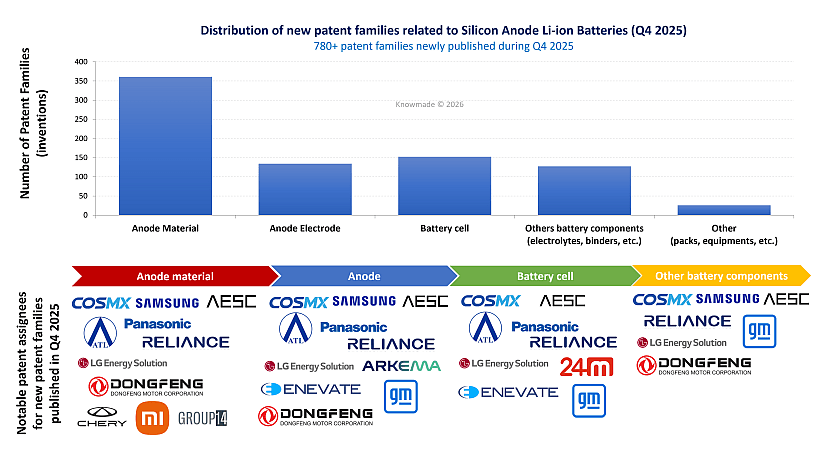
Figure 1: Distribution of new patent families related to silicon anode Li-ion batteries published in Q4 2025, and notable patent applicants (non-exhaustive list). Note that a patent family can belong to multiple segments.
In Q4 2025, several companies entered the intellectual property (IP) landscape by filing their first patents related to silicon anode Li-ion battery technologies, signaling the start of their IP activity in this domain. Among them are EBS Square, a South Korean pure-play company founded in 2023 that develops advanced electrolyte materials and related technologies for all-solid-state batteries, and INBCT, a South Korean start-up established in 2020 specializing in advanced nanomaterials, with a particular emphasis on graphene-based materials.
Recent Advances in Silicon-Based Anode Materials Driven by Start-Ups and Industry Leaders
EBS Square’s patent application US20250343234 introduces a composite negative electrode active material combining a silicon-based active material with carbon-based material, carbon nanoparticles, and graphene quantum dots (GQDs). This multi-component design aims to enhance electrical conductivity, buffer volume changes, stabilize the electrode structure, and improve SEI uniformity, thereby improving capacity, initial efficiency, rate performance, and cycling stability (Figure 2).
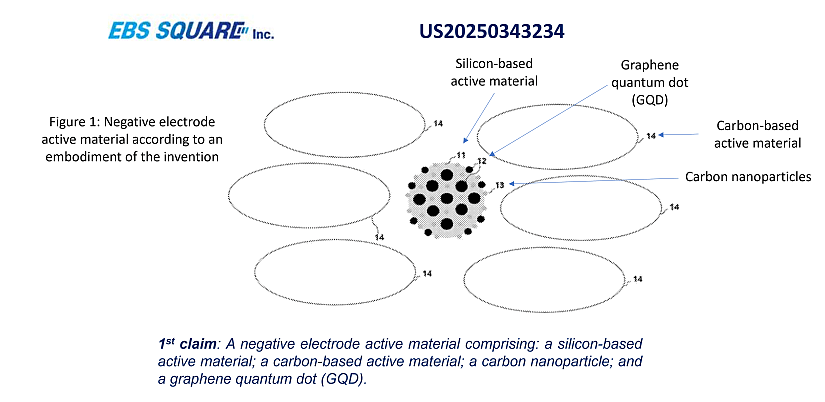
Figure 2: Negative electrode active material (EBS Square, US20250343234).
INBCT, patent application KR10-2025-0174467 introduces a silicon–carbon composite formed by agglomerating nano-sized silicon with nano-sized carbon structures. This composite could buffer silicon’s volume changes, suppress particle crushing and electrode peeling, stabilize the SEI layer, and thereby improve cycling stability while maintaining high capacity and output performance (Figure 3).
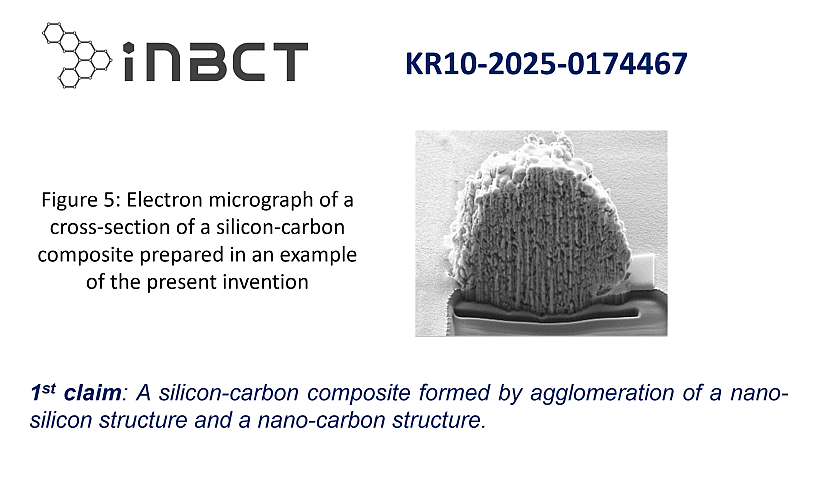
Figure 3: Cross-section of a silicon-carbon composite (INBCT, KR10-2025-0174467).
Tracking recent patent applications from leading companies further highlights the accelerating innovation in silicon-based materials for Li-ion battery anodes. For example, newly published filings from Samsung and ATL primarily focus on advanced silicon-based composite architectures (Figure 4).
In patent application US20250323272, Samsung disclosed a silicon–carbon composite negative electrode active material. Specifically, the solution consists of silicon dispersed within a highly graphitized crystalline carbon matrix having a low specific surface area (≤ about 8 m²/g) and a high graphitization degree (≥ about 95%), which is intended to enhance electrical conductivity, structural stability, and lithium-ion transport.
In parallel, ATL proposed a silicon-carbon negative electrode material in which the cross-sectional contour of the silicon-carbon particles includes defined straight-line segments, such that the ratio of the total straight-line length to the particle perimeter (X/L) is controlled between 0.2 and 0.8. This engineered particle morphology introduces partial planar surfaces that could enhance particle packing density, increase interparticle contact and binder retention, stabilize the conductive network, and mitigate the impact of silicon volume expansion during cycling. As a result, the secondary battery could exhibit improved performances (CN121172104).
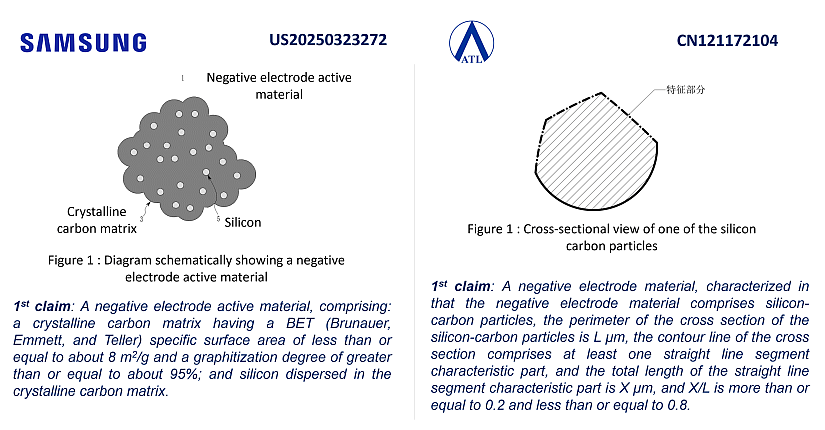
Figure 4: Notable inventions disclosed by Samsung (US20250323272) and ATL (CN121172104) during Q4 2025.
Strengthen Your Market Position through KnowMade’s Exclusive Silicon Anode Patent Intelligence
Staying competitive in this fast-moving field requires timely and reliable insights, which is precisely what KnowMade’s Silicon Anode Li-ion Batteries Patent Monitoring Service delivers. Issued on a quarterly basis, the service integrates a well-structured patent database with detailed analytical reports, enabling you to track competitors’ R&D and IP strategies while identifying emerging opportunities for technological development and business growth.
One of the service’s main strengths is continuous access to KnowMade’s analysts throughout the year, providing the flexibility to request complementary studies on specific technologies or company patent portfolios, and to tailor the monitoring to your priorities by targeting selected players and/or market segments. For subscription information or further details, please contact us at contact@knowmade.fr
Press contact
contact@knowmade.fr
Le Drakkar, 2405 route des Dolines, 06560 Valbonne Sophia Antipolis, France
www.knowmade.com
About the author
Arnaud Capgras works for KnowMade as a Patent Analyst in the field of Materials Chemistry and Energy storage. He holds a Chemistry-Process Engineering Degree from the Chemistry and Chemical Engineering School of Lyon (CPE Lyon, France). He also holds the International Industrial Property Studies Diploma (Patents) from the CEIPI (Strasbourg, France).
About KnowMade
KnowMade is a technology intelligence and IP strategy firm specializing in the analysis of patents and scientific publications. We assist innovative companies, investors, and research organizations in understanding the competitive landscape, anticipating technological trends, identifying opportunities and risks, improving their R&D, and shaping effective IP strategies.
KnowMade’s analysts combine their strong technology expertise and in-depth knowledge of patents with powerful analytics tools and methodologies to transform patent and scientific data into actionable insights to support decision-making in R&D, innovation, investment, and intellectual property.
KnowMade has solid expertise in Semiconductors and Packaging, Power Electronics, Batteries and Energy Management, RF and Wireless Communications, Photonics, MEMS, Sensing and Imaging, Medical Devices, Biotechnology, Pharmaceuticals, and Agri-Food.