
SOPHIA ANTIPOLIS, France – August 31, 2026 │ KnowMade announces the release of its latest report, RF GaN Technology Patent Landscape Analysis 2026. Based on the analysis of more than 5,300 patent families, the study maps innovation, intellectual property (IP) leadership, and strategic opportunities across the complete RF GaN value chain, from wafers and epitaxial structures to devices, modules, packaging, circuits and applications.
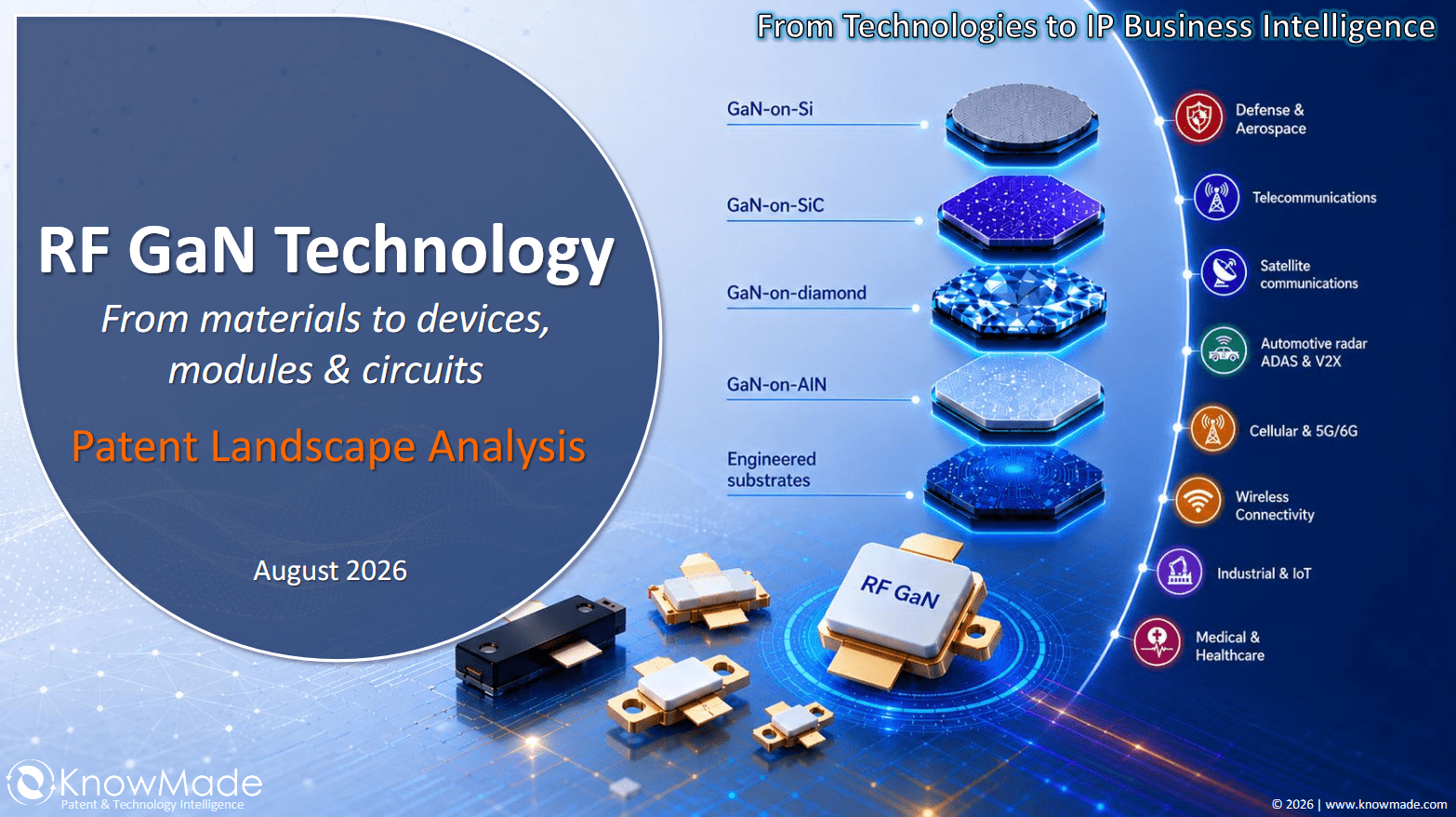
RF GaN technology is entering a new phase of growth and strategic competition. While telecommunications infrastructure remains an important market, demand is increasingly supported by defense, electronic warfare, counter-drone systems and satellite communications. At the same time, the industrial landscape is being reshaped by consolidation, technology licensing, patent transfers, manufacturing-sovereignty initiatives and restrictions affecting access to critical materials and process know-how.
In this context, the RF GaN patent landscape report provides a unique perspective on the companies and research organizations developing key technologies, the jurisdictions in which they are seeking protection and the technical areas that may become future sources of differentiation, dependency or confrontation.
A maturing RF GaN patent landscape with focused areas of competition
KnowMade’s analysis reveals a dual trend. Overall RF GaN patenting activity is slowing as the technology matures, yet competition is intensifying in selected technology segments and geographic regions. Portfolio breadth, international patent coverage and control of critical process technologies are becoming increasingly important dimensions of IP leadership.
GaN-on-SiC remains the reference platform for high-power telecommunications, radar and electronic-warfare applications. Its strong power density, thermal performance, reliability and qualification history continue to support its position. However, substrate availability, manufacturing know-how, long qualification cycles and the transition toward larger wafer diameters maintain high barriers to entry.
In parallel, GaN-on-Si is progressing from an emerging platform toward early industrialization, supported by 8-inch manufacturing. Its development could create opportunities in lower-power radio architectures and, over the longer term, in FR3 and 6G applications above 10 GHz. Nevertheless, cost competitiveness, thermal management, reliability, process maturity and scalability remain important technical challenges.
Innovation is also extending toward longer-term platforms such as GaN-on-diamond and GaN-on-AlN, which aim to overcome current thermal and performance limitations. Although their industrial adoption remains constrained by cost, manufacturing complexity and qualification requirements, patent activity can help identify the organizations already building positions in these emerging fields.
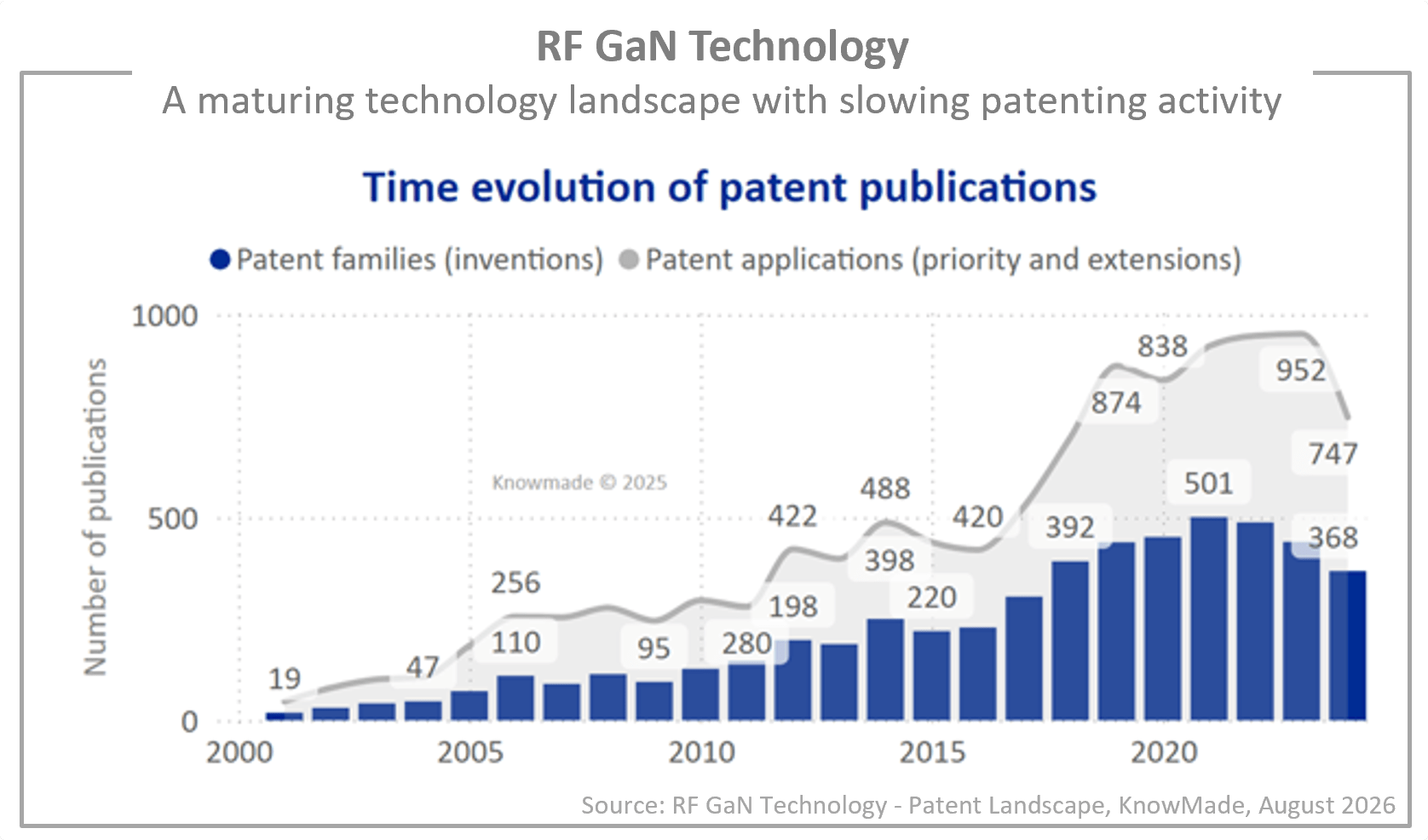
Figure 1: Time evolution of RF GaN patent publications, highlighting the progressive maturation of the global patent landscape.
More than 5,300 patent families mapped across the RF GaN value chain
The RF GaN Technology Patent Landscape Analysis 2026 report examines innovation across four main supply-chain and technical segments:
Wafers and epiwafers: more than 760 patent families covering substrates, semi-insulating materials, epitaxial structures and manufacturing processes.
RF GaN devices: more than 2,700 patent families relating to RF transistors, including HEMTs and HBTs, RF diodes, device architectures and performance challenges.
Modules and packaging: more than 580 patent families addressing packaging, thermal management, RF front-end modules, power-amplifier assemblies and transmit/receive systems.
Circuits and applications: more than 1,500 patent families covering MMICs, RFICs, power amplifiers, switches, filters, circuitry, operating methods and end applications.
The report also investigates technical challenges and innovation topics such as current collapse and dynamic on-resistance, enhancement-mode operation, GaN-on-Silicon, monolithic integration, vertical devices and thermal management. For every segment, KnowMade identifies the main patent assignees, most active IP players, newcomers, legal status of patents, and details recent inventions.
This structured approach shows where innovation efforts are concentrated and how IP positions extend across the supply chain. It also helps to determine whether companies are developing vertically integrated portfolios or focusing on specific technology layers, where partnership, licensing or technology-dependency issues may emerge.
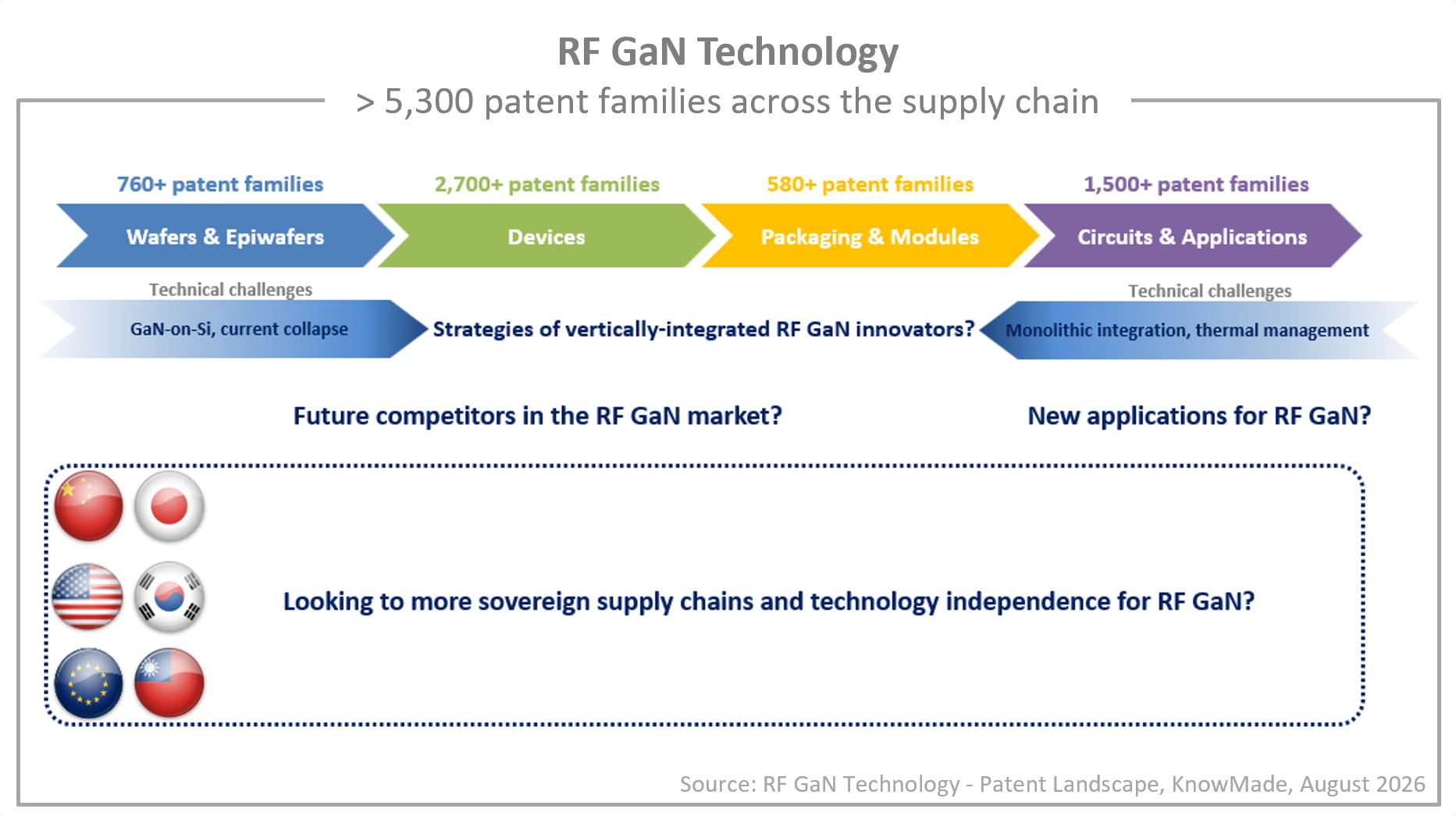
Figure 2: Distribution of RF GaN patent families across wafers & epiwafers, devices, modules & packaging, and circuits & applications.
MACOM strengthens its position while regional IP strategies evolve
Competitive IP positions remain concentrated around a limited number of established players, but the balance is shifting across the RF GaN ecosystem.
Japanese companies continue to hold strong patent positions in RF GaN wafers and epiwafers. Sumitomo Electric and NGK Insulators rank among the established leaders, while Shin-Etsu has emerged as a significant challenger. These portfolios reflect the strategic importance of substrates and epitaxy for device performance, manufacturing control and supply-chain security.
US players retain a particularly strong IP position in devices and downstream technologies. Following the transfer of Wolfspeed’s RF business and related patent assets, MACOM stands out for the breadth of its IP position across RF GaN devices, packaging and circuits. Its patent portfolio gives the company one of the most comprehensive positions across the value chain and illustrates how acquisitions and patent transfers can rapidly reshape the competitive landscape.
China’s leading RF GaN patent positions remain largely driven by state-backed organizations and academic institutions. CETC and Xidian University are particularly prominent, with Xidian University emerging as the leading domestic patent applicant in RF GaN devices. At the same time, industrial companies including Huawei, Enkris and Hanhua Semiconductor are becoming more visible, indicating a gradual diversification of China’s innovation base beyond institutional applicants.
Patent protection strategies are also becoming more international. US companies are increasingly extending their filings into Europe and China, while Japanese players have expanded their patent protection in the United States and China since 2022. Europe is consequently gaining importance as a strategic patent jurisdiction, as companies seek to protect technologies in the regions where RF GaN supply chains, markets and industrial capabilities are developing.
Together, these trends point toward more direct competition across both technical segments and jurisdictions. They also underline the growing role of patents in securing access to critical technologies, protecting qualified manufacturing routes, preserving freedom to operate and strengthening negotiating positions in licensing, cross-licensing, partnerships and mergers and acquisitions.
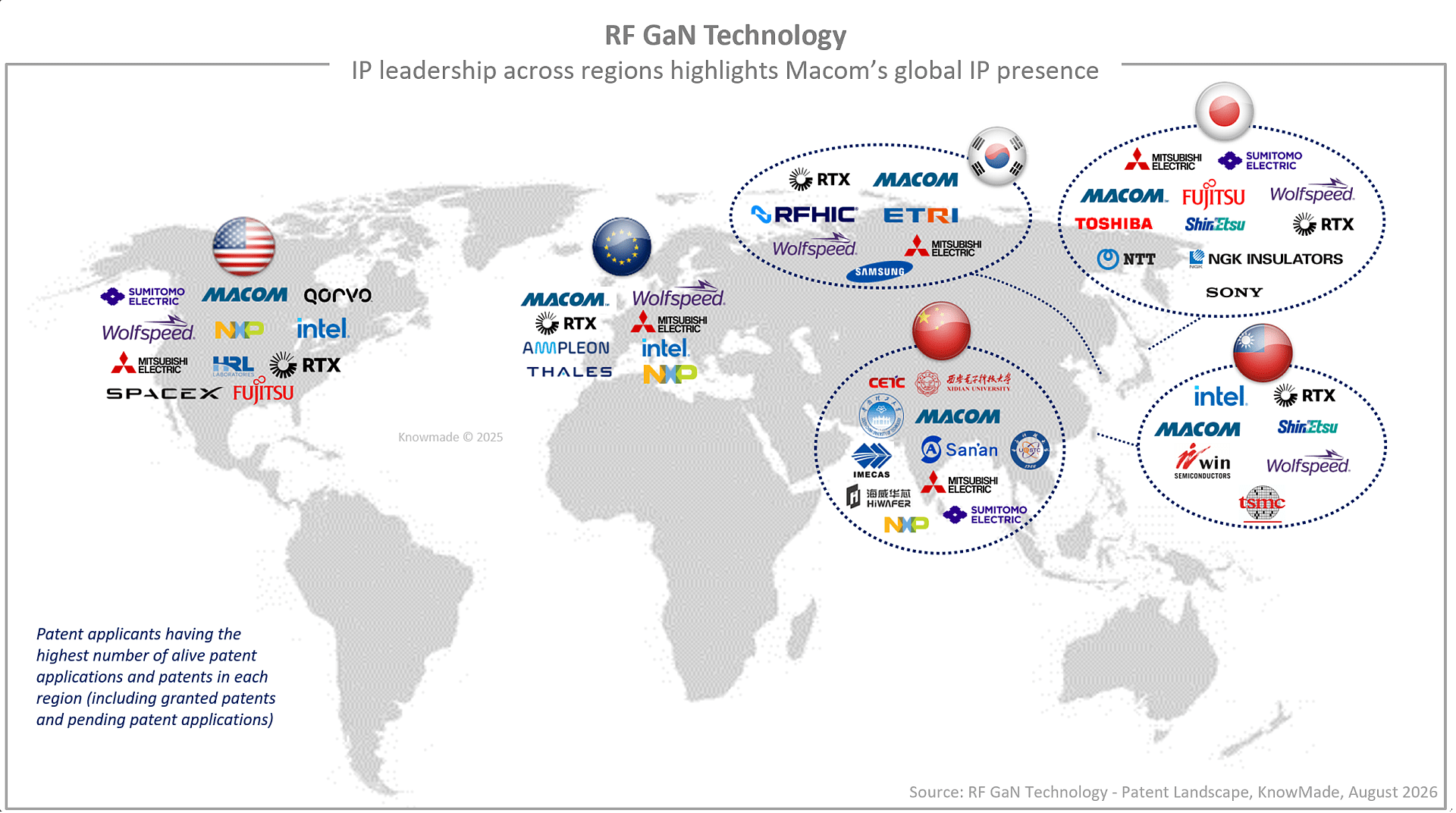
Figure 3: Regional RF GaN IP leadership, showing the international patent presence of leading patent assignees.
A decision-support resource for R&D and IP teams
The report provides more than 270 slides combining a global patent-landscape overview with analyses by region and supply-chain segment. It examines patenting trends in the United States, Japan, Europe, China, Taiwan and South Korea, and includes detailed IP profiles of 15 key players. These IP profiles compare portfolio size, technical coverage, geographic coverage, legal status, and recent notable innovations.
The study is accompanied by an Excel database containing the 5,300 patent families analyzed, each classified by supply-chain position and technical segment and linked to an updated online database providing access to full patent texts, including claims, descriptions, and drawings, as well as legal-status information and downloadable patent documents.
For R&D teams, this patent dataset supports technology scouting, competitor monitoring and the identification of emerging research directions. For IP professionals, it facilitates IP portfolio benchmarking, prior-art investigations, freedom-to-operate preparation and the detection of potentially relevant or blocking patent positions. It can also help organizations identify collaboration, licensing, acquisition and technology-transfer opportunities across the RF GaN ecosystem.
An optional interactive dashboard extends the analysis by allowing authorized users to explore the RF GaN patent landscape dynamically. Users can filter the data by players, technology, country or geographic area, publication period and legal status, and move directly from global trends to specific players, technical topics and patent families.
The RF GaN Technology Patent Landscape Analysis 2026 report is designed for semiconductor companies, RF component and system manufacturers, research organizations, and R&D and IP teams seeking a clearer view of the technologies and patent strategies shaping the next phase of RF GaN competition.
Press contact
contact@knowmade.fr
Le Drakkar, 2405 route des Dolines, 06560 Valbonne Sophia Antipolis, France
www.knowmade.com
About the author
Rémi Comyn, PhD. works at KnowMade as Senior Analyst in the field of Compound Semiconductors and Electronics. He holds a PhD in Physics from the University of Nice Sophia-Antipolis (France) in partnership with CRHEA-CNRS (Sophia-Antipolis, France) and the University of Sherbrooke (Québec, Canada). Rémi previously worked in compound semiconductors research laboratory as Research Engineer.
About KnowMade
KnowMade is a technology intelligence and IP strategy firm specializing in the analysis of patents and scientific publications. We assist innovative companies, investors, and research organizations in understanding the competitive landscape, anticipating technological trends, identifying opportunities and risks, improving their R&D, and shaping effective IP strategies.
KnowMade’s analysts combine their strong technology expertise and in-depth knowledge of patents with powerful analytics tools and methodologies to transform patent and scientific data into actionable insights to support decision-making in R&D, innovation, investment, and intellectual property.
KnowMade has solid expertise in Semiconductors and Packaging, Power Electronics, Batteries and Energy Management, RF and Wireless Communications, Photonics, MEMS, Sensing and Imaging, Medical Devices, Biotechnology, Pharmaceuticals, and Agri-Food.