
SOPHIA ANTIPOLIS, France – January 28, 2026 │ The growing understanding of the skin microbiome has profoundly reshaped approaches to dermatological and dermocosmetic innovation. Among emerging strategies, postbiotics, defined as non-living bacterial derivatives with biological activity, are gaining increasing attention as safe and stable alternatives to live probiotics. Positioned as the crossroads of immunology, skin barrier science and formulation constraints, postbiotics raise both scientific and intellectual property challenges. KnowMade explores the biological rationale and patent strategies supporting their rise in dermatological skincare.
Postbiotics emerge as key modulators of skin inflammation
Over the past decade, the skin microbiome has transitioned from an emerging research topic to a central pilar of dermatological and dermocosmetic innovation. This shift has recently been illustrated by the renewed scientific and commercial focus on postbiotic-based formulations, such as Lipikar Baume AP+M from Laroche-Posay, a flagship product for atopic-prone skin reformulated around the postbiotic Vitreoscilla filiformis lysate.
Originally introduced as a microbiome-friendly emollient, Lipikar Baume AP+M has become a reference in the management of atopic dermatitis by targeting not only skin barrier repair but also microbiome-mediated inflammation control, positioning postbiotics as functional dermatological actives rather than secondary formulation components. This product evolution reflects a broader industrial trend: moving away from live probiotics toward non-living bacterial derivatives offering improved stability, safety and regulatory robustness, while preserving biologically relevant immunomodulatory effects.
Beyond product launches, this transition is supported by a growing set of scientific literature and an increasingly structured intellectual property landscape. Major dermocosmetic players have invested heavily in patents covering bacterial lysates, fractions and metabolites capable of modulating innate immune pathways and restoring epidermal homeostasis, driving the rise of postbiotics in dermatological skincare.
The skin microbiome as a regulator of cutaneous inflammation
Skin microbiome is composed of a diverse community of bacteria, fungi and viruses that coexist with host cells and contribute to epidermal homeostasis. Commensal bacteria, such as Staphylococcus epidermidis, Cutibacterium acnes and Corynebacterium species, play a crucial role in educating the immune system and maintaining barrier integrity.
Under physiological conditions, microbial-derived signals activate innate immune pathways in a tightly regulated manner, particularly through toll-like receptors (TLRs) expressed by keratinocytes and immune cells. Indeed, TLRs have the capacity to recognize bacterial products and set off pro-inflammatory cytokines (Figure 1). TLR4, along with CD14, recognizes lipopolysaccharides of gram-negative bacteria. TLR5 is specifically activated by bacterial flagellin, a structural protein of bacterial flagella which helps to incite NF-κB translocation and interleukin-8 secretion. TLR3 recognizes bacterial broken nucleic acid which has been taken into the cells and leads to the activation of TNF-α and various interleukins. TLR2 signaling has been shown to promote antimicrobial peptide production, reinforce tight junctions and modulate inflammatory cytokine secretion.
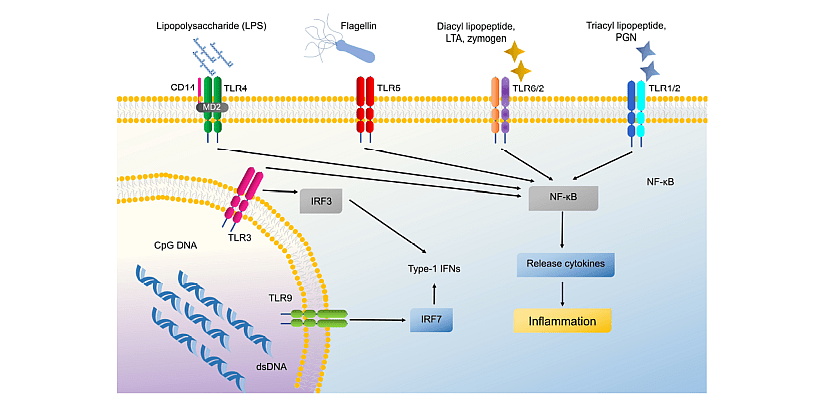
Figure 1: Signaling pathway of Toll-like receptors (TLRs) in keratinocytes (Gupta et al., 2024).
TLRs can activate nuclear factor of κ-light chain-enhancer of activated B cells (NF-κB) and cause cytokine production. LTA: lipoteichoic acid. PGN: peptidoglycan. IFNs: interferons. MD2: myeloid differentiation factor 2. IRF3: IFN regulatory factor 3.
In contrast, in situations characterized by reduced diversity or overrepresentation of pathogenic strains, so called microbiome dysbiosis, chronic inflammatory disorders appear, including atopic dermatitis, acne, rosacea and sensitive skin (Figure 2). Dysregulated microbial-host interactions lead to increased production of pro-inflammatory mediators, such as IL-1β, IL-8 and TNF-α, while anti-inflammatory pathways, such as IL-10 signaling, are impaired.
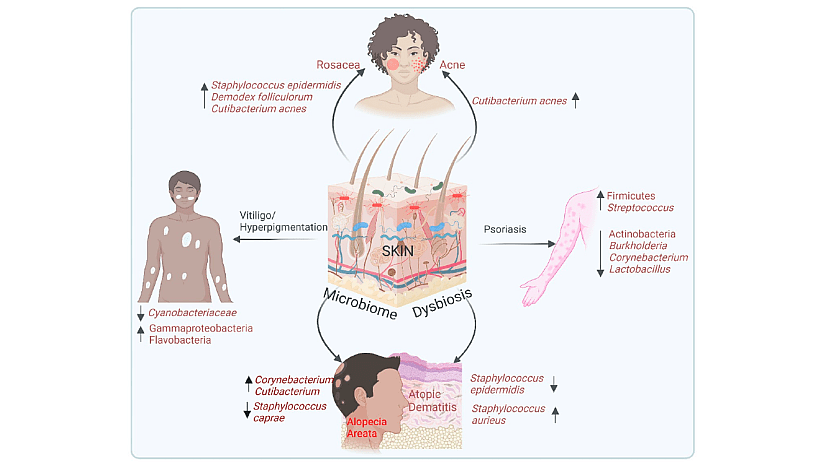
Figure 2: Association between skin microbiome dysbiosis and various dermatological conditions (Prajapati et al., 2025).
Microbial balance is essential in maintaining skin health and its perturbation represents a contributing factor to disease pathogenesis. Acne occurs due to an increase in the abundance of Cutibacterium acne. Rosacea causes increased levels of Staphylococcus epidermis, Demodex folliculorum and Cutibacterium acne. During psoriasis, an enrichment of Firmicutes and Streptococcus occurs, while actinobacteria, Burkholderia, Corynebacterium and Lactobacillus are reduced. Vitiligo and/or hyperpigmentation leads to a reduction in the diversity of Cyanobacteriaceae and Flavobacteria. Atopic dermatitis results from the dysregulation of the microbiome with increased Staphylococcus aureus and reduced Staphylococcus epidermidis. In addition, the alopecia areata expresses high levels of Corynebacterium and Cutibacterium with a reduction in Staphylococcus caprae.
From probiotics to postbiotics: a fundamental change
Early cosmetic strategies attempted to restore microbiome balance through the topical application of live probiotics. However, maintaining bacterial viability in cosmetic formulations remains technically challenging and raises both safety and regulatory concerns, particularly for compromised or diseased skin. Postbiotics, defined as non-viable bacterial cells, lysates or fractions, conferring health benefits to the host, have emerged as a valid alternative. These include bacterial cell wall components, membrane fractions, metabolites and heat-killed microorganisms.
From a mechanistic point of view, postbiotics retain the ability to interact with pattern recognition receptors, such as TLR2, thereby reproducing many of the beneficial immunomodulatory effects of live bacteria without the risk associated with microbial proliferation. Studies have shown that specific postbiotic preparations can stimulate IL-10 production and reduce atopic dermatitis inflammation (Volz et al., 2014), downregulate pro-inflammatory cytokines IL-8 and IL-1β expression (Lee et al., 2025), improve epidermal differentiation and barrier recovery (Figure 3) (Jung et al., 2019) and reduce transepidermal water loss in inflamed skin (Prajapati et al., 2025).
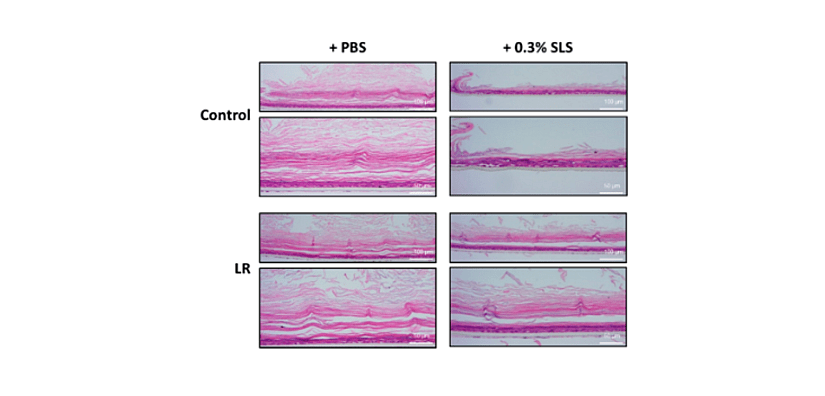
Figure 3: Attenuation of irritant-induced cytotoxicity by Lactobacillus rhamnosus lysates in reconstructed human epidermis (Jung et al. 2019).
Lactobacillus rhamnosus lysate was applied to reconstructed human epidermis (Keraskin) four to eight times. Tissues were then treated with PBS (control condition) or Sodium Lauryl Sulfate (SLS) for 10 minutes to alter skin barrier protective effects. Histological images (H&E staining) show that Lactobacillus rhamnosus-treated epidermal tissues have more intact stratum corneum, particularly after SLS treatment.
Postbiotics offer greater formulation stability, compatibility with preservatives and a clearer regulatory positioning, making them particularly attractive for dermocosmetic and dermatological applications.
Postbiotics entering dermatological and dermocosmetic products
The translation of postbiotic science into commercial products has accelerated over the last five years. Several dermatological brands have incorporated bacterial lysates or fractions into formulations targeting sensitive, reactive or atopic-prone skin. Among the most documented examples is Vitreoscilla filiformis, a non-pathogenic bacterium originally isolated from thermal waters. Its lysate has been shown to activate TLR2 signaling in keratinocytes, leading to enhanced barrier function and reduced inflammation in both preclinical and clinical studies (Mahe et al., 2013; Gueniche et al., 2021). Similarly, Lactobacillus-derived lysates have been investigated for their capacity to modulate inflammatory responses and support epidermal homeostasis, particularly in acne-prone and sensitive skin (Cui et al., 2022; Lee et al., 2023).
These products are positioned as additional or alternative solutions to mild topical corticosteroids, especially for long-term management of chronic inflammatory conditions where tolerability and safety are critical.
The intellectual property landscape behind postbiotic skincare
From an IP perspective, postbiotic-related inventions focus on the use of non-living bacterial preparations for cosmetic or dermatological purposes, the identification of specific bacterial strains or fractions responsible for biological effects, and the treatment or prevention of inflammatory skin conditions. Claims often emphasize functional outcomes, such as reduction of inflammation, improvement of barrier function or modulation of immune responses, rather than mere composition.
A central reference: Vitreoscilla filiformis lysate
Among early intellectual property filings addressing postbiotic approaches in dermatological skincare, L’Oréal work on lysates of Vitreoscilla filiformis represents a frequently cited example. Vitreoscilla filiformis is a non-pathogenic bacterial species historically associated with thermal water environments and sensitive skin care. Its lysate has been extensively investigated for its ability to modulate cutaneous immune responses and reinforce epidermal barrier function. The French patent FR3007649 describes the cosmetic and/or dermatological use of a lysate of bacteria of the genus Vitreoscilla, notably Vitreoscilla filiformis, for preventing or alleviating sensitive, reactive or inflammatory skin conditions. The invention covers non-living bacterial preparations obtained through controlled lysis processes, resulting in compositions containing bacterial cell wall fragments, intracellular components and metabolites. The claims are directed to non-therapeutic topical compositions intended to improve skin tolerance, reinforce the cutaneous barrier and reduce inflammatory manifestations, particularly in sensitive or atopic-prone skin. Filed in 2013, this patent was granted in France in 2015. Lapsed since 2022, it constitutes a single-country patent family and serves as an illustrative early priority that formalized the postbiotic concept applied to sensitive and topic-prone skin and contributed to structuring subsequent developments in this area. The notability of Vitreoscilla filiformis as a postbiotic skincare active is reinforced when considering the broader scientific and intellectual property corpus surrounding this bacterium. Additional L’Oréal filings have addressed Vitreoscilla filiformis-derived preparations across multiple dermatological indications, including skin barrier impairment, oxidative stress and scalp disorders such as hyperseborrhea (FR3007648, WO2013144869 and corresponding EP and US family members), reflecting a diversified application scope spanning both skin and scalp care.
A broader postbiotic approach: generic postbiotic compositions
Beyond strain-specific strategies such as Vitreoscilla filiformis lysates, the postbiotic intellectual property landscape also includes broader approaches aimed at protecting non-viable microbial-derived materials as a functional class of skincare actives. These approaches typically include bacterial lysates, fermentation supernatants, filtrates and mixed postbiotic fractions, and are positioned around functional outcomes such as skin homeostasis, barrier support and inflammation modulation. This trend reflects a strategic shift toward platform-type postbiotic inventions, designed to secure broader and more flexible protections in a rapidly evolving microbiome field.
The patent application WO2019/149940, filed by the Italian company Postbiotica, is representative of this strategy. It describes topical postbiotic-based compositions derived from Lactobacillus casei/Lactobacillus paracasei fermentation for the prevention or treatment of skin diseases, including inflammatory skin conditions. The claims emphasize safety, tolerability and suitability for long-term topical use, while associating these postbiotic preparations with immune modulation and maintenance of skin homeostasis, including inflammatory skin conditions. Rather than protecting a single bacterial strain, the scope of the claims aims to secure postbiotics as a category of bioactive ingredients applicable to dermatological and dermocosmetic formulations. Filed in 2018, the international PCT application has since progressed through national phases, resulting in a granted patent in the USA in 2025, while prosecution has continued in other territories, including Europe and Canada.
A more formulation-oriented approach is illustrated by the patent application WO2020/260200, filed by L’Oréal, which claims a cosmetic composition comprising a lysate of a Bifidobacterium species in combination with yeast extracts and specific monosaccharides (mannose or rhamnose). The invention targets skincare applications including protection against environmental stressors, improvement of skin appearance and maintenance of epidermal balance. The technical contribution presents the integration of non-viable bacterial material within a structured formulation network, designed to optimize compatibility with cosmetic matrices and to enhance functional skin benefits. Rather than relying on the biological activity of a single postbiotic ingredient, the claimed compositions emphasize synergistic interactions between bacterial lysates and selected formulation components known to interact with epidermal barrier mechanisms and innate immune pathways. This approach reflects a shift toward system-level postbiotic formulations, where differentiation is achieved through combinatorial design and formulation know-how rather than through strain-specific positioning alone. Filed in 2019, the patent applications have been granted in key territories, including France, Canada, China, Korea and Japan, with prosecution ongoing in the USA and in Europe, highlighting the industrial relevance and perceived robustness of this formulation-driven postbiotic strategy in the global dermocosmetic market.
The patent application WO2014/170595, filed by Greentech, describes an ingredient-supplier-driven strategy focused on postbiotic mixtures combining a culture supernatant and a bacterial cell lysate derived from Lactobacillus pentosus. The claimed cosmetic and dermatological compositions are positioned to improve overall skin condition and support epidermal barrier function. The technical contribution of the invention lies in the detailed description of fermentation processes, controlled biomass separation and recovery of distinct soluble and cellular fractions, enabling the production of standardized and reproducible postbiotic ingredients. This dual approach allows protection of both the ingredient concept and its method of preparation, representing a strategy well suited to ingredient suppliers operating across cosmetic brands. Filed in 2013 and granted in many countries, this patent family illustrates a forward-looking IP positioning that anticipated the growing interest in complex postbiotic ingredients withing the dermocosmetic market.
More recent filings illustrate an evolution toward claims explicitly framed around skin microecology regulation. The patent application WO2022/199660, filed by Bloomage Biotechnology, discloses a Lactobacillus rhamnosus strain and its ferment lysate, positioned to regulate skin microbial balance by inhibiting the propagation growth of pathogenic bacteria, and support skin immunity through up-regulation of gene expression (antimicrobial peptides HBD2/3). The claims associate postbiotic preparations with the modulation of skin microecology rather than direct antimicrobial activity, reflecting a shift toward ecosystem-based skincare concepts. This positioning allows broad applicability across cosmetic and dermocosmetic indications. Filed in 2021, this patent application has been granted in China and is currently pending in Europe and the United States.
Emerging postbiotic trends
Recent patent filings illustrate a strategic shift from broad lysate toward combinatorial approaches with microbiome-oriented strategies. Innovation focuses on how postbiotics can be integrated into cosmetic systems to modulate skin homeostasis and microbiome balance. The patent application WO2024/137562, filed by Colgate Palmolive, describes postbiotic personal care compositions with short-chain fatty acids and amino acids formulated to balance the skin microbiome, through inhibition of undesirable bacteria (such as Staphylococcus aureus) and promotion of commensal ones. Filed in 2023, this patent is still pending in many countries. The patent application WO2023/006621, filed by L’Oréal, discloses methods for cosmetic treatment of scalp and hair using compositions combining a Bifidobacterium lysate with antioxidants (ascorbic acid and derivatives), aiming to soothe, condition and support microbial balance on keratin materials. Filed in 2021, this patent is granted in France and in Japan and pending in other countries. Together, these filings highlight a maturating postbiotic IP landscape driven by incremental formulation innovation.
Positioning of other dermocosmetic players
Other major dermocosmetic players, including NAOS (Bioderma) and Pierre Fabre, have published extensively on skin microbiome modulation and postbiotic concepts through scientific publications, clinical studies and product developments. However, their IP strategies appear to rely more heavily on formulation know-how, incremental innovations and broader cosmetic composition claims than on clearly delimited patent families explicitly dedicated to postbiotic lysates as unique active ingredients. This diversity of approaches highlights the strategic choices faced by industrial actors in the microbiome field, between securing narrowly defined, mechanism-driven postbiotic patents and leveraging broader formulation-based protection supported by scientific validation.
Conclusion
Despite its promising aspect, postbiotic innovation faces several challenges. Indeed, demonstrating causal links between specific bacterial components and clinical outcomes remains complex, particularly given inter-individual microbiome variability. From an IP point of view, distinguishing inventions from prior art requires precise definition of bacterial strains, preparation methods and biological effects. Across the patent families, recurring protection strategies emerge. Indeed, composition claims cover lysates, fermented fractions or mixtures, while use claims targets skin inflammation, barrier dysfunction or microecological imbalance. A clear emphasis on non-viable microbial materials ensures compatibility with cosmetic regulations and long-term topical use. Looking ahead, postbiotics are likely to be combined with complementary actives, such as peptides, lipids or prebiotics, and integrated into personalized skincare strategies supported by microbiome analysis. This combination of biology, formulation and science-driven personalization is expected to further shape the competitive landscape.
Postbiotics represent a scientifically grounded evolution of microbiome-based skincare. By using non-living bacterial derivatives, dermatological and dermocosmetic companies can harness immunomodulatory benefits while addressing formulation, safety and regulatory constraints. The associated IP landscape reflects this shift, with patents increasingly focused on functional mechanisms and therapeutic outcomes rather than microbial viability. As microbiome science continues to refine our understanding of host-microbe interactions, postbiotics are about to become the bases of next-generation dermatological innovation.
Press contact
contact@knowmade.fr
Le Drakkar, 2405 route des Dolines, 06560 Valbonne Sophia Antipolis, France
www.knowmade.com
About the author
Céline Gaudel, PhD., works at KnowMade in the field of Biotechnology and Life Science. She holds a PhD in Molecular and Cellular Biology from the University of Nice Sophia-Antipolis (France). She previously worked in academic research in France and Ireland and has a background in skin science and cosmetic ingredients.
About KnowMade
KnowMade is a technology intelligence and IP strategy firm specializing in the analysis of patents and scientific publications. We assist innovative companies, investors, and research organizations in understanding the competitive landscape, anticipating technological trends, identifying opportunities and risks, improving their R&D, and shaping effective IP strategies.
KnowMade’s analysts combine their strong technology expertise and in-depth knowledge of patents with powerful analytics tools and methodologies to transform patent and scientific data into actionable insights to support decision-making in R&D, innovation, investment, and intellectual property.
KnowMade has solid expertise in Semiconductors and Packaging, Power Electronics, Batteries and Energy Management, RF and Wireless Communications, Photonics, MEMS, Sensing and Imaging, Medical Devices, Biotechnology, Pharmaceuticals, and Agri-Food.